
Crypto organizations in 2026 face a big challenge: too many users are having security problems.

We often hear about people losing their digital money because of scams, hacks, or simple mistakes. These incidents cause a lot of headaches for crypto platforms. They mean more calls to customer support and can even make people trust crypto companies less. It’s a real drain on resources and can hurt a company’s good name.
Here’s the thing: many of these problems can be stopped with better education. That’s where standardized risk management courses become so important. Imagine if everyone on your team, and even your users, knew exactly how to spot a phishing attempt or how to keep their digital wallets safe. Structured training and certifications can help a lot. They teach everyone the best ways to keep crypto safe, much like how specific programs like those for ISO 14971 risk management guide other industries in safety standards.
When your team learns through these specific risk management courses, it means fewer security incidents. This builds more trust with your users and helps your organization follow important rules. Just like how auditing courses help check for weak spots, or a supply chain risk certification ensures products move safely, these crypto courses make your digital operations stronger. We’re talking about practical steps to protect valuable digital assets and maintain a strong security posture in Web3 crypto security.
This guide will show decision-makers like Chief Security Officers, Heads of Customer Success, HR leaders, and Product managers how to use these vital risk management courses. You’ll learn how to pick the right training, how it helps your team, and how it reduces the risk of costly mistakes. By investing in crypto security education now, you can keep your users safer and strengthen your business for the future. For more practical advice on keeping your crypto safe, you might also find the free Clicks and Trades newsletter helpful.

Ready to make your crypto organization more secure and trustworthy?
1) The current crypto risk landscape every training program must address
Crypto can be exciting, but it also has its hidden dangers. In 2026, crypto users and organizations face many real threats. These problems range from simple mistakes to clever attacks. Let’s look at some of the common risks every training program must teach people about.
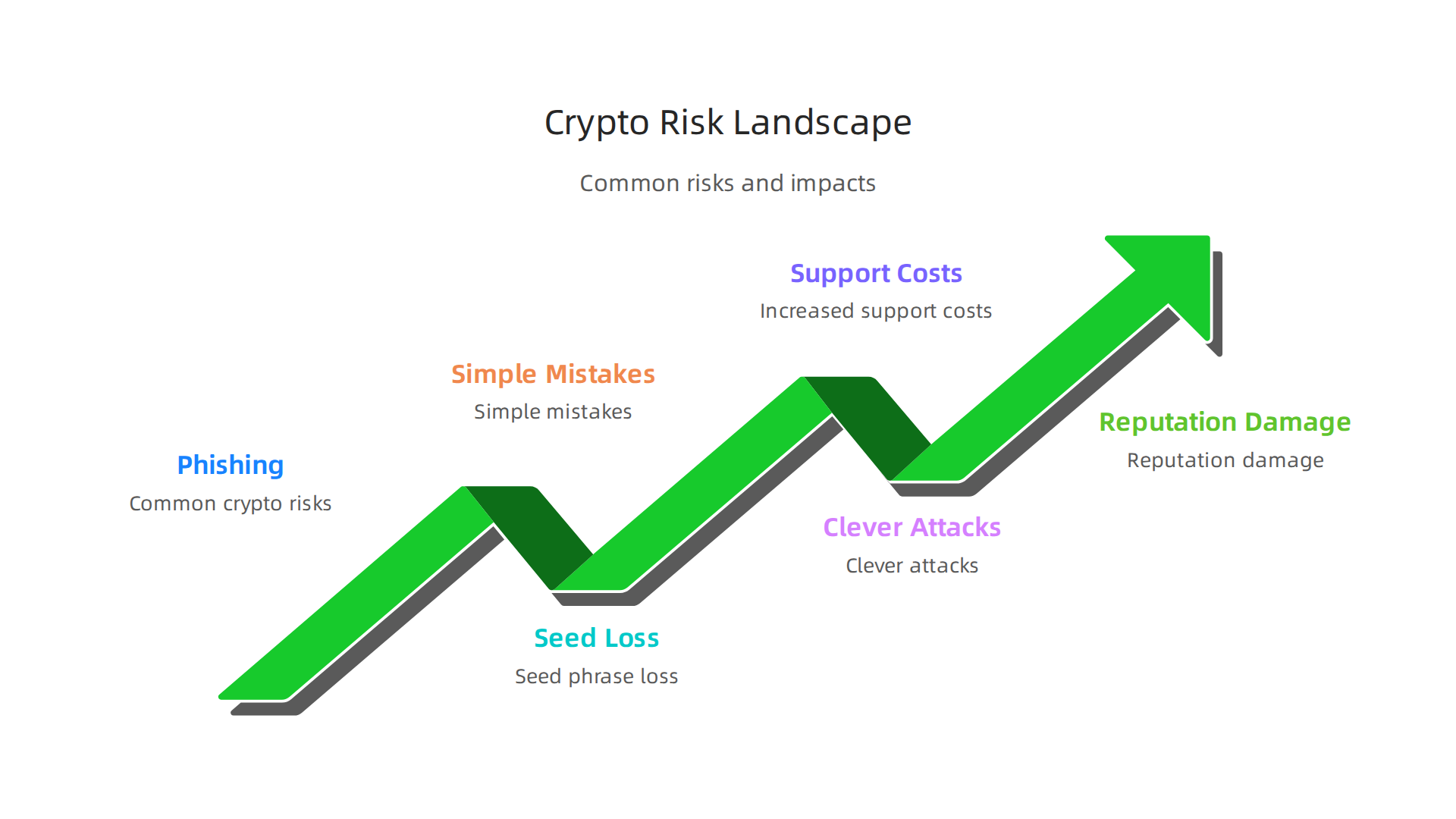
First, there are user-facing risks. These are problems that can happen to anyone using crypto:
- Phishing scams: This is when tricky messages or fake websites try to fool people into giving away their crypto login details or private keys. The fake sites often look just like real ones.
- Seed phrase loss or theft: A seed phrase is a special list of words that unlocks a crypto wallet. If someone loses it or a scammer gets it, all the crypto in that wallet can be stolen.
- Social engineering: This means tricking someone into doing something they shouldn’t, like sending crypto to a scammer or giving out personal information. It’s not a technical hack but a human one.
These individual problems quickly become big issues for crypto organizations. When users face scams or lose their crypto, it impacts the platform they use.
- Higher support costs: Every incident means more calls, emails, and time spent by customer support teams trying to help. This drains company resources.
- Damage to reputation: If many users have security problems, it makes the company look bad. People lose trust, and this can stop new users from joining. Cyber-enabled fraud has nearly tripled, and many incidents are not even reported, showing how widespread this issue is [The Rise of Cyber Events and Digital Fraud in the Financial Sector].
- More rules and checks: Governments and financial bodies are watching crypto more closely. They want to make sure users are safe. This means organizations face more pressure to meet new regulations, as highlighted in the [PwC Global Crypto Regulation Report 2026].
Right now, many crypto companies try to teach users with simple FAQs or short blog posts. This kind of "ad hoc" or unplanned education isn’t always enough. It’s like giving someone a map but no driving lessons. This is where proper risk management courses come in. They fill these gaps by offering clear, step-by-step guidance.
Think about other important industries that use structured training. For example, some companies follow strict guidelines like iso 14971 risk management for medical devices to ensure safety. There are also supply chain risk certification programs to keep products secure as they move around the world. Even auditing courses exist to help find and fix problems in systems. These programs all show the power of organized learning.
Crypto organizations need to offer similar clear risk management courses to their teams and users. This helps everyone understand how to protect valuable digital assets and reduce the chance of costly mistakes. For example, knowing how to choose and secure your crypto wallet is a fundamental step. You can learn more about important wallet security choices in our guide on why wallet choices matter for organizations in 2026.
By moving from loose advice to structured education, organizations can build a much safer crypto environment in 2026.
For more practical steps and clear guidance on keeping your crypto safe, the free Clicks and Trades newsletter can be a great help. It offers step-by-step crypto education and safety tips.
Moving from informal advice to proper risk management courses and certifications brings many good things for businesses in the crypto world.
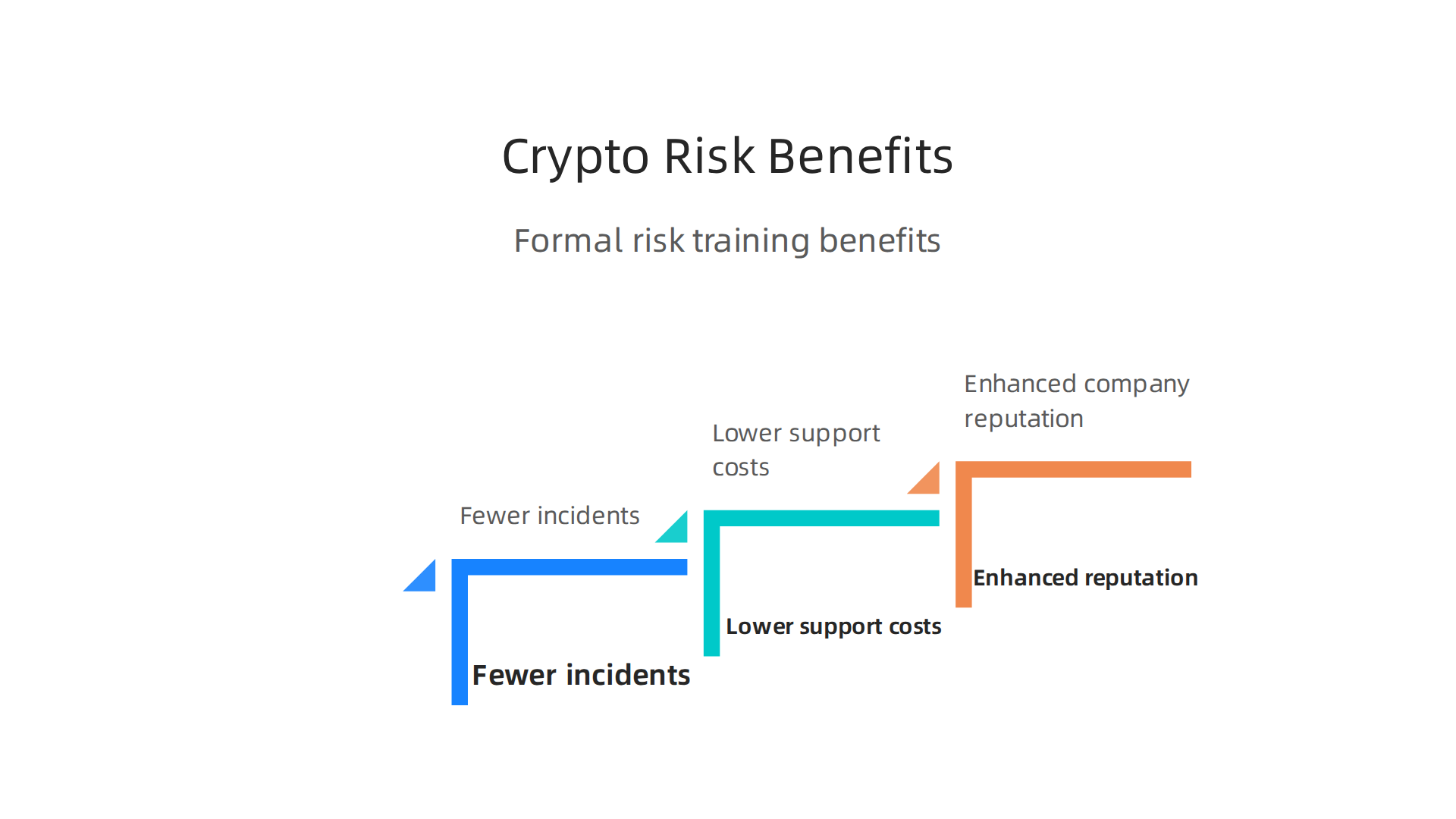
These aren’t just feel-good changes; they lead to real improvements you can see and measure.
Real Benefits You Can See
When your team and users take formal risk management courses, everyone becomes much better at spotting dangers. This means fewer mistakes and fewer problems with scams or hacks.
- Fewer Bad Events: Well-trained users are less likely to fall for phishing or lose their private keys. This directly cuts down on security incidents. For example, illicit crypto transactions can be huge, with estimated incoming value around $158 billion in 2025, showing how critical good defenses are [2026 Crypto Crime Report – Illicit Crypto Trends & Typologies]. Training helps avoid becoming part of those numbers.
- Lower Support Costs: Imagine fewer calls or emails to your customer support team because people know how to protect themselves. This saves your company money and lets your team focus on other important tasks.
- Happier Users Who Stay: When users feel safe and confident on your platform, they are more likely to stick around.
Strong security education makes them trust your business more.
Good Things You Might Not Measure Directly
Besides the clear numbers, formal risk management courses also bring other important benefits that make your business better overall.
- Better Company Name: A business that actively teaches its users about safety looks responsible and caring. This builds a strong brand reputation in the market. Companies that offer training from places like ACAMS show they are serious about managing financial crime risks in crypto [Risk Management Programs for Cryptoasset and Blockchain – ACAMS].
- Easier to Follow Rules: Governments and financial groups are always making new rules for crypto. Showing that you have a strong training program helps you meet these rules. It also proves you are trying to keep everyone safe. Keeping up with these regulatory changes is a big task for businesses in 2026 [US Crypto Policy Tracker Regulatory Developments].
- Stand Out From Others: In a busy crypto market, offering clear, structured security training and
risk management coursescan make your business special. It helps you attract more users and partners who value safety. Programs that provide a "Certificate in Risk Management and Audit for Crypto Businesses" help people understand how to manage risks effectively [Certificate In Risk Management And Audit For Crypto Businesses].
How Certifications Help
Certifications take these benefits even further. When someone earns an IT Risk Fundamentals Certificate or completes a CRISC Training program, it shows they have a proven level of knowledge

[IT Risk Fundamentals Certificate – ISACA] [CRISC Training 2026 | Step-by-Step Guide to Pass Exam – YouTube]. This is very important for financial advisors or larger businesses looking to work together.
For example, a financial advisor with an ABA risk certification or an organization whose staff has completed a fema risk management certification shows they are serious about risk. This makes it much easier for other businesses to trust them with their crypto assets. Just like iso 14971 risk management sets standards for medical devices, crypto certifications set standards for digital asset safety. These kinds of certifications create a clear pathway for everyone to adopt best practices and make the crypto world safer.
To learn more about keeping your crypto assets secure and understanding key risks, consider exploring comprehensive crypto security education for organizations.
For more helpful, step-by-step crypto education and safety tips, the free Clicks and Trades newsletter is a great resource. You can get clear guidance right in your inbox.
Formal risk management courses in crypto teach people the important skills they need to stay safe. These courses make sure everyone, from beginners to experts, knows how to spot dangers and keep digital money protected. In 2026, with cyber threats always changing, learning these core skills is more important than ever.
What You Learn in Crypto Risk Management Courses
When you take these specialized risk management courses, you gain key abilities. Here are the main things you learn:
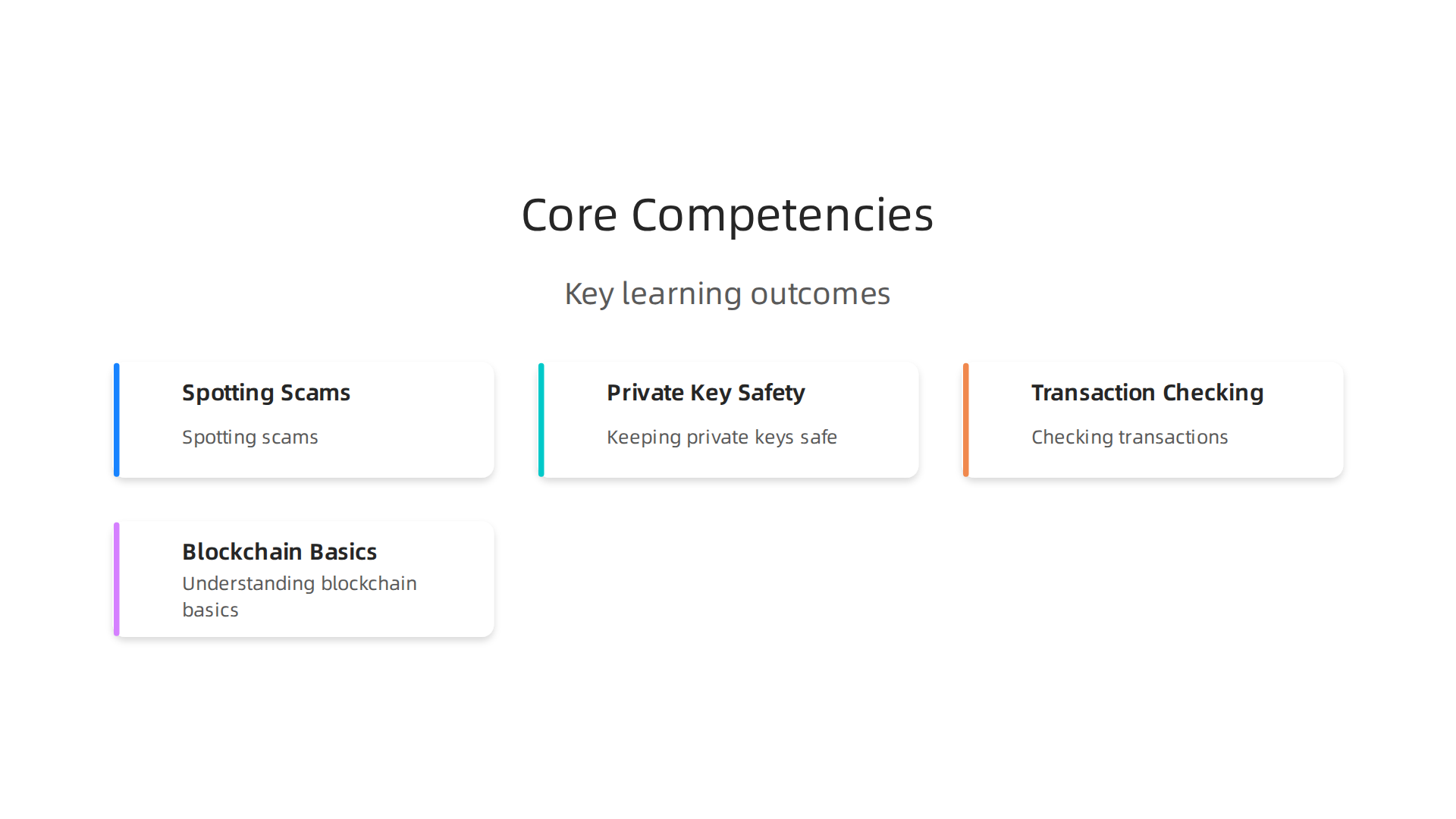
- Spotting Bad Stuff: You learn to see common tricks like phishing emails or fake websites. You also learn how to recognize scam patterns that try to steal your crypto. Many cyber threats, like ransomware, are still a big problem in 2026, making this skill vital for everyone online [2026 Ransomware and Cyber Threat Report].
- Keeping Keys Safe: This is super important. You learn the best ways to protect your private keys and seed phrases, which are like the passwords to your digital wallet. This includes understanding how different wallets work and why keeping your information secret is a must.
- Checking Transactions: Before you send crypto, you’ll learn how to double-check that the address is correct and that the transaction is truly what you intend. This helps avoid costly mistakes, as digital fraud continues to rise in the financial world [The Rise of Cyber Events and Digital Fraud in the Financial Sector].
- Understanding Blockchain Basics: While not overly technical, courses cover how blockchain works at a basic level, helping you understand why some risks exist and how crypto security helps. You might even touch on topics like smart contract risks.
Who Needs These Skills? Different Jobs, Different Learning
The skills taught in risk management courses depend on your role in the crypto world:
- For Everyday Users: You need the basics like spotting phishing, keeping your wallet safe, and checking transactions. This helps you avoid losing your funds and builds trust in crypto.
- For Customer Support Teams: These teams need to understand common user mistakes and advanced scam tactics. They also need to guide users through security steps without giving away too much personal information.
Auditing coursescan also help these teams understand best practices for secure operations. - For Compliance and Legal Teams: These folks learn about anti-money laundering (AML) rules and other laws that apply to crypto. Programs like those offered by Scorechain focus on crypto compliance and blockchain analytics training [Crypto Risk and AML Training & Education Programs]. This helps the business follow all the rules, which are constantly updated in 2026.
- For Product and Tech Teams: They learn how to build secure crypto products from the ground up. This means understanding system vulnerabilities and how to prevent them.
- For Financial Advisors and Business Leaders: For these roles, comprehensive risk oversight is key. Certifications like an
ABA risk certificationshow a commitment to understanding and managing financial risks, including those unique to crypto. This helps them give better advice and make smart business choices.
How We Know You’ve Learned
After taking risk management courses, there are ways to check what you’ve learned:
- Knowledge Checks: These are simple quizzes to see if you remember key facts and definitions.
- Simulations: You might go through practice scenarios, like identifying a fake website or safely signing a mock transaction.
- Practical Tests: Sometimes, you’ll be asked to show how you would secure a wallet or verify a transaction in a more hands-on way. This is about proving you can do what you’ve learned, not just recall it.
These assessments make sure that the learning from risk management courses truly sticks, making the crypto space safer for everyone.
To get even more helpful tips and easy-to-understand guides on keeping your crypto safe, consider subscribing to the free Clicks and Trades newsletter. It’s a great way to stay informed.
4) Designing Effective Training: Pedagogy, Pacing, and Accessibility for Global Users
Learning how to keep your crypto safe is super important. But how do we make sure that risk management courses really teach people in a way that sticks? It’s not just about what you learn, but how you learn it. Good training needs to be designed smartly, especially for people all over the world.
Make Learning Easy and Memorable
When we create risk management courses for crypto, we think about how adults learn best. Here are some key ideas:
- Make it Important: People learn better when they see how the information helps them right away. So, crypto security courses show how to avoid losing your money or getting scammed in real life. This makes the lessons feel truly useful.
- Small Chunks of Info: No one wants to read a giant book all at once. We break down big topics into small, easy-to-digest parts, often called microlearning. This helps you learn bit by bit without feeling overwhelmed How Spaced Repetition and Microlearning Boost Memory.
- Review Over Time: Just learning something once isn’t enough. We use "spaced repetition," which means you revisit important safety tips and lessons over a few days or weeks. This helps you remember the information for a long time, stopping you from forgetting what you learned Why Spaced Repetition Is Critical for Learning & Retention.
Training for Everyone, Everywhere
Crypto is used by people all over the world. So, our risk management courses need to work for everyone.

- Speak Their Language: We make sure courses are in different languages and use examples that make sense in various countries. This is called localization. In 2026, with new rules like the GENIUS Act coming into play, it’s even more important that training explains things clearly for all users Federal Register/Vol. 91, No. 69/Friday, April 10, 2026/Proposed ….
- Simple Words: We avoid fancy technical words. Instead, we use simple, everyday language so everyone can understand.
- Easy to Use: The training should be accessible for everyone. This means clear videos with subtitles, easy-to-read text, and tools that work on different devices. This helps people with different needs or who live in places with slower internet.
Learning by Doing
Learning about crypto safety isn’t just about reading. It’s about practice!
- Fake Attacks: You might get to try out a "fake" phishing email to see if you can spot it. These interactive games help you learn how to protect yourself without real risk.
- Wallet Guides: Step-by-step guides show you exactly how to set up a secure wallet or send crypto safely. This is like a walk-through for keeping your digital money locked up tight. For businesses, comprehensive Web3 crypto security for organizations in 2026 often includes such practical training.
- Real-Life Stories: You might practice what to do in different situations, like if you think your account has been hacked. These scenario-based tests make sure you know how to act when it really matters.
These ways of teaching make sure that the risk management courses help you build strong habits for crypto safety. For even more simple guides and helpful tips on protecting your crypto, you might want to subscribe to the free Clicks and Trades newsletter. It’s a great way to stay informed about the latest in crypto security.
5) Choosing Delivery Formats: Self-Paced Courses, Instructor-Led, Microlearning, and Simulation
Once we know what to teach in risk management courses for crypto safety, the next big question is how to deliver it. Different ways of learning work best for different people and situations. Think of it like choosing the right tool for the job.
Let’s look at the popular ways we deliver crypto security training in 2026.
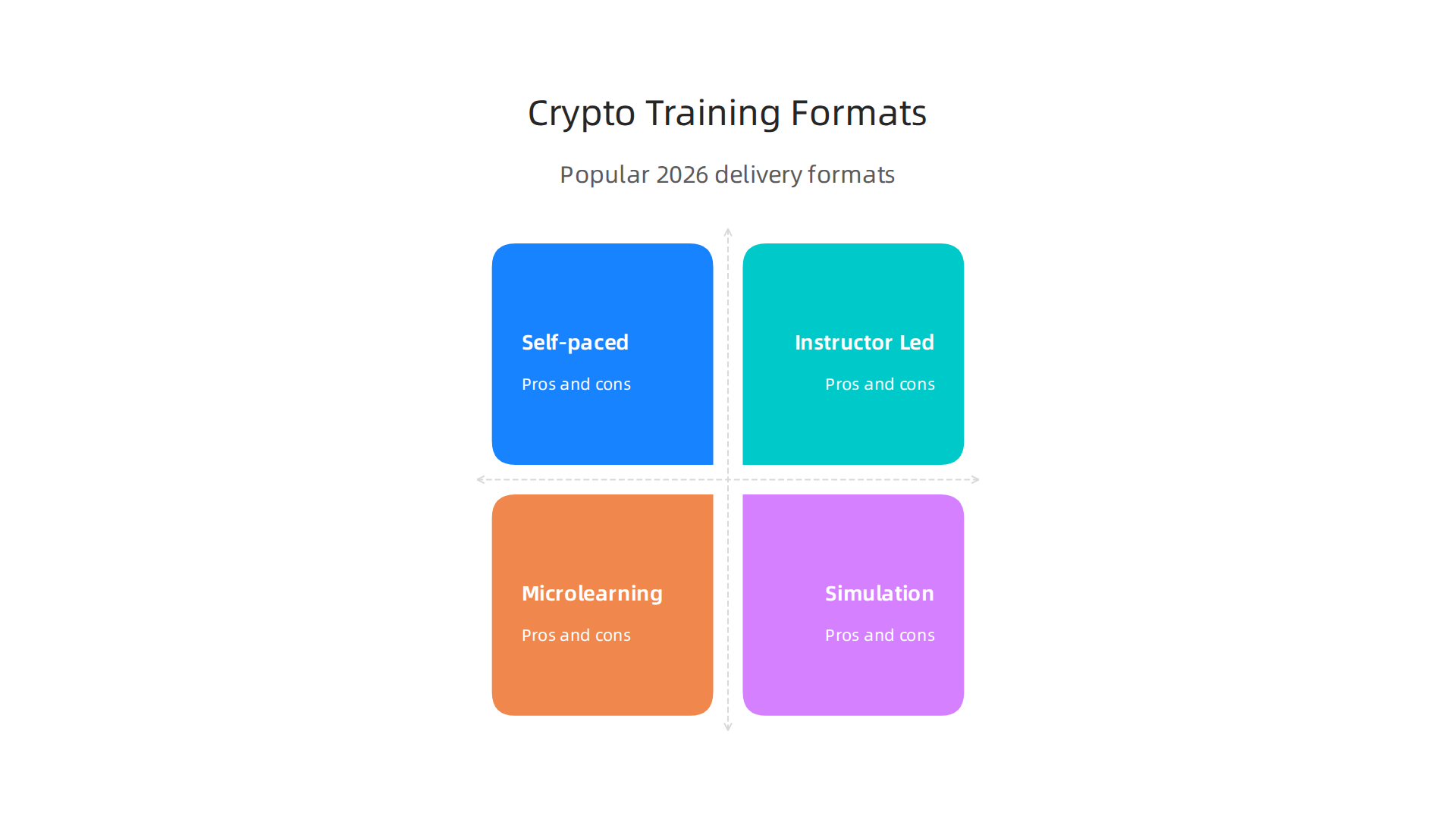
Learning on Your Own: Self-Paced Courses
Self-paced courses let you learn whenever and wherever you want. You get all the materials, like videos and readings, and you go through them at your own speed.
- Good things: These courses are very flexible. You can do them on your lunch break or late at night. They can reach many, many people, which is great for organizations needing to train a large workforce or a global user base.
- Things to watch out for: Sometimes, it’s hard to stay focused when no one is guiding you. People might forget things if they don’t have someone to ask questions or practice with.
Learning with a Teacher: Instructor-Led Training (ILT)
This is like a traditional classroom, but it can be online or in person. A teacher leads the class, talks about the topics, and answers questions live.
- Good things: You can ask questions right away and get direct answers. It’s often more engaging because you can talk to others. This format is great for more complex topics, like detailed
auditing coursesor deep dives intoiso 14971 risk managementstandards. - Things to watch out for: It’s not as flexible for busy schedules and can be more expensive if you need to pay for a teacher and a specific time slot. It also can’t reach as many people at once.
Quick Lessons: Microlearning
We talked about this before, but microlearning is all about small, bite-sized lessons. Think of them as tiny learning snacks.
- Good things: They are super easy to fit into a busy day. Because they’re short and focused, you remember the information better, especially when used with spaced repetition, which means revisiting key points over time How Spaced Repetition and Microlearning Boost Memory. They are perfect for quick refreshers on how to secure a crypto wallet or spot a phishing scam.
- Things to watch out for: They don’t go deep into subjects. They are best for reinforcing specific points, not for teaching big, new ideas from scratch.
Learning by Doing: Simulations
Simulations are like practice runs. You get to try out what you’ve learned in a safe, fake environment. For example, trying to spot a fake email or setting up a practice secure wallet.
- Good things: This is often the best way to learn practical skills. You get hands-on experience without any real risk. It’s especially useful for roles that deal directly with crypto, like customer support teams or those needing
supply chain risk certificationin Web3. For organizations, ensuring employees understand crypto safety is a big part of overall Web3 crypto security for organizations in 2026. - Things to watch out for: Creating good simulations can take a lot of effort and special tools.
What Works Best for Whom?
Different people and different jobs need different training methods.
- Regular users might do best with a mix of self-paced courses and microlearning for everyday safety tips.
- Teams handling large amounts of crypto might need more in-depth instructor-led sessions and lots of simulations to practice what to do if something goes wrong. This is crucial for topics like
csulb risk managementprinciples applied to digital assets.
Keeping Track of Your Learning
No matter the format, technology helps us keep track. Learning Management Systems (LMS) are like online classrooms that host the courses, track your progress, and even give you certificates when you finish. This is important for showing that you’ve learned crucial skills, much like getting a fema risk management certification.
Choosing the right mix of these methods makes sure that crypto risk management courses really help people build safe habits and protect their digital money. If you’re looking for more step-by-step crypto education and safety tips, the free Clicks and Trades newsletter can provide clear guidance.
6) Metrics and Evaluation: How to Measure Training Success and Link to Risk Reduction
We’ve talked about how to teach crypto safety, but how do we know if our risk management courses are actually working? It’s super important to measure success. This helps us see if people are learning, if risks are going down, and if the training is a good use of time and money.
Think of it like this: You wouldn’t just build a house and hope it stands up. You’d check it along the way. The same is true for training. In 2026, with cyber fraud constantly changing, measuring results for crypto security education is a must, not just a nice-to-have. For example, reports show that cyber-enabled fraud has nearly tripled, often going unreported The Rise of Cyber Events and Digital Fraud in the Financial Sector. Also, illicit cryptocurrency wallets saw an estimated $158 billion in value in 2025 alone, which shows how big the problem is 2026 Crypto Crime Report – Illicit Crypto Trends & Typologies.
What to Look For: Success Metrics
When we measure how well crypto safety training works, we focus on a few key things:

- Knowledge Retention: Do people remember what they learned? This tells us if the training sticks. If they don’t remember, they can’t use it.
- Incident Rate Changes: Are there fewer security problems, like scams, hacks, or mistakes? This is a big one. The goal of
risk management coursesis to lower these risks. - Support Ticket Volume: Are fewer people asking for help with security issues? If training works, your support teams should get fewer questions about lost funds or suspicious emails.
- Time-to-Resolution: If a problem does happen, can people fix it faster because of their training? This means less downtime and less money lost.
How We Check: Evaluation Methods
To gather these numbers, we use different ways to check on learners:
- Pre/Post Assessments: We give quizzes before training and again after. This shows how much new information people have learned.
- Phishing Simulation Results: We send fake phishing emails to see who clicks on them. If fewer people click after training, it means they’re better at spotting scams.
- Cohort Comparisons: We compare a group that got training to a similar group that didn’t. This helps us see the real impact of the training.
- A/B Tests: Sometimes we try two slightly different training programs with two groups to see which one works best.
Sharing the News: Reporting to Important People
After collecting all this information, it’s vital to share it. We create reports for managers, company leaders, and even people who make rules about crypto. This shows them that the risk management courses are making a difference and helping the business meet important goals. It’s like showing proof you’ve earned a special qualification such as an aba risk certification or passed demanding auditing courses. This helps to build trust and shows that the company is serious about keeping things safe.
Making sure your team understands crypto security isn’t just a good idea; it’s a critical part of how organizations stay safe in 2026. This kind of education is truly a crypto security education the 2026 business imperative you can’t ignore.
For more step-by-step crypto education and safety tips, the free Clicks and Trades newsletter can provide clear guidance.
7) Integrating Courses into Product, Support, and Compliance Workflows
After we’ve figured out that our risk management courses are working well, the next big step is to make them a regular part of how everything runs. It’s like having a great recipe, but then you need to actually cook it and serve it to everyone. We need to put crypto safety training right into our daily work, our customer help, and how we follow rules.
In 2026, simply offering training isn’t enough. We have to make it easy for people to find and use this important knowledge exactly when they need it.
Making Safety a Part of Everything We Do
Think about it. We can add crypto safety training into many places:
- When people first join: When new employees or customers start, we can give them basic
risk management coursesright away. This way, they learn how to be safe from day one. It’s like a safety briefing before a big trip. - In help sections: If someone has a question about a crypto scam, they should easily find answers in the help guides or FAQs. The training content can become part of our support knowledge bases, so people get clear, consistent advice.
- Inside crypto apps: Imagine getting a quick safety tip when you’re about to send crypto. These in-wallet prompts can be short reminders that help prevent mistakes right when they matter most. This kind of ongoing education is crucial for strong web3 crypto security for organizations in 2026.
Keeping Good Records for Rules and Checks
Regulators, which are the groups that make sure companies follow the rules, care a lot about how we protect people. So, it’s super important to keep good records of who has taken risk management courses and earned special safety badges or certificates.
This helps us show that we’re serious about safety when someone comes to audit us, like when they check our books. For example, laws are changing quickly for crypto assets in 2026, with agencies like the SEC and FinCEN making new rules to keep things safe and fair for everyone
Application of the Federal Securities Laws to Certain Types of …. Having proper documentation of auditing courses and user education helps us meet these demands. You might even hear about standards like iso 14971 risk management in other areas, and crypto businesses can learn from those too to build strong safety systems. Some organizations even encourage employees to get an IT Risk Fundamentals Certificate.
Working Together to Make Crypto Safer for Everyone
We can’t do it all alone. By working with other groups, we can make crypto safety even better.
- Crypto exchanges: These are like big marketplaces for crypto. If we team up with them, we can help teach more people on their platforms how to stay safe.
- Financial advisors: People who help others with money can use our training to give their clients good advice about crypto risks.
- Other crypto projects: When different crypto projects work together, they can share safety tips and make sure more people in the crypto world are protected. This helps scale training efforts, kind of like managing risks across a complex
supply chain risk certificationwould cover.
This team effort creates a bigger, stronger safety net for everyone.
To keep learning about crypto safety with clear, easy-to-understand guidance, you can get free tips delivered right to your inbox. The Clicks and Trades newsletter offers step-by-step crypto education and safety advice to help you protect your digital assets.
Summary
This article explains why standardized risk management courses are essential for crypto organizations in 2026 and shows decision-makers how to pick, design, deliver, and measure effective security education. It reviews the common user-facing threats—phishing, seed phrase theft, and social engineering—and outlines how structured courses and certifications reduce incidents, lower support costs, and improve trust and compliance. The guide walks through what learners will master (spotting scams, protecting keys, verifying transactions, and basic blockchain risks), how to make training memorable with microlearning and simulations, and which delivery formats suit different roles. It also covers practical metrics for assessing impact and how to embed training into onboarding, product flows, and regulatory reporting. After reading, leaders will know how to select course formats, evaluate vendors and certifications, run pilots, and integrate education into workflows to measurably reduce crypto risk across users and teams.