

Why Crypto Security Education is a Business Imperative
You know the problem. It is not just about your platform’s code. It is about your user losing their life savings because they clicked a phishing link.

It is about your employee accidentally exposing a private key. For any business touching cryptocurrency today, the single biggest operational risk is no longer your own security team. It is the security knowledge of the people who use your service.
The hidden cost is staggering. Every user security incident a customer support ticket, a reputational blow, and a potential regulatory headache. Research from the International Monetary Fund shows that cyber-enabled fraud in the financial sector has nearly tripled, and much of it goes underreported. In the world of crypto, where transactions are irreversible, these user mistakes are not just costly, they are permanent. They erode the very trust your brand is built on.
So, what if you could turn that reactive support burden into a strategic asset? This is the power of proactive crypto security education. Instead of waiting for the disaster to happen, you empower your users and employees before they interact with your platform. You shift from being a help desk for crises to a trusted guide for safety.
This is not about adding a page of dense FAQs. It is about building a culture of security from the first touchpoint.
Think of it as risk management. The World Economic Forum’s 2026 Cybersecurity Outlook highlights building resilience as a top challenge. For a crypto business, resilience includes your users. By providing clear, step-by-step education on securing wallets, recognizing scams, and protecting seed phrases, you directly reduce your exposure to catastrophic user errors.
This is where leveraging trusted, external education becomes a smart move. You do not need to build this curriculum from scratch. Partnering with or directing your community to specialized, beginner-friendly resources allows you to offer immense value without straining your internal teams. It builds brand trust by showing you care about your users’ safety beyond your own platform walls. You become a source of security, not just a service.
For leaders, this is a clear ROI. Fewer support tickets. Lower compliance risk. A more secure, confident user base. A stronger brand reputation. Whether you run an exchange, a financial advisory firm, or a corporate HR department, providing this education is no longer a nice-to-have. It is a core business imperative for 2026.
A great first step is to get clear, actionable guidance delivered to you. For straightforward safety tips and step-by-step education, many professionals find value in subscribing to free newsletters like the one from Clicks and Trades. It breaks down complex topics into simple actions.
Want to start building this layer of protection for your organization? Getting the right information is key.
Sign Up for free, plain-English crypto security insights today.
The Growing Crisis: Quantifying the Cost of Crypto Security Gaps
Let us talk about numbers. The cost of crypto security gaps is not a vague worry. It is a clear line on a balance sheet and a growing threat to your brand’s survival. When users lack basic security knowledge, the bills start adding up fast.
Think about it this way. Every time a user falls for a phishing scam or loses a seed phrase, it triggers a chain reaction of expenses for your business.
Direct costs hit your bottom line immediately:
- Skyrocketing support tickets: Your team spends hours, sometimes days, trying to help with irreversible transactions.
- Compliance and reporting overhead: Major incidents may require legal reviews and reports to regulators.
- Compensation and goodwill payments: To save a customer relationship, you might refund losses out of your own pocket.
The scale is enormous. Research indicates that cyber-enabled fraud in the financial sector has nearly tripled, with much of it underreported. In crypto, where transactions cannot be undone, these user errors are permanent financial drains.
But the indirect costs are what truly hollow out a business over time.
The Silent Killer: Brand Reputation Erosion
Your brand is built on trust. A single public story about a user losing their savings because they were not educated can undo years of marketing. People do not just blame themselves. They blame the platform they were using.
This creates a cycle of attrition. Insecure users leave. Potential new users are scared away. Your brand becomes associated with risk instead of innovation. The World Economic Forum’s 2026 Cybersecurity Outlook identifies building resilience as a top challenge. For a crypto business, true resilience is impossible if your user base is constantly vulnerable. You cannot have a strong castle with a drawbridge made of paper.
This reputational damage makes every other business goal harder. It affects hiring, partnerships, and investor confidence. It is a slow leak that can sink the ship.
The Regulatory Spotlight is Now on You
Here is the new reality for 2026. Regulators are no longer just looking at your internal controls. They are increasingly focused on your users’ protection. A major report on Confronting the Illicit-Finance Hydra in Crypto Markets highlights the specific features of crypto assets that enable crime. Governments are responding by demanding that businesses do more to educate and protect consumers.
Frameworks like those discussed in the PwC Global Crypto Regulation Report 2026 increasingly include principles for consumer protection and risk awareness. If you cannot show proactive steps to educate your users, you face not just fines, but operational shutdowns. Regulatory pressure turns user education from a "nice-to-have" into a mandatory compliance checkbox. For a deeper look at managing this business risk, our guide on health risk assessment for crypto businesses is a crucial read.
Closing the Gap Starts with Simple Education
The good news? This crisis has a clear solution. The most effective way to reduce these costs is to prevent the incidents from happening in the first place. This does not mean building a complex internal blockchain course from scratch. It means providing clear, actionable, and ongoing security guidance.
This is where leveraging trusted resources makes strategic sense. Directing your community to straightforward, beginner-friendly education empowers them and directly reduces your risk. For many organizations, a great first step is sharing reliable, free resources that break down complex topics. Newsletters like the one from Clicks and Trades offer step-by-step crypto safety tips in plain English, helping to build that essential layer of user knowledge.
Quantifying the cost makes the path forward obvious. Investing in user security education is not an expense. It is your most effective form of financial and reputational insurance.
Ready to start building that defense for your organization? Getting the right information is key.
Sign Up for free, plain-English crypto security insights today.
Beyond Support Tickets: The Ripple Effect on Your Business
The real cost of a security gap is not just the ticket that lands in your support queue. It is the wave of consequences that follows. Think of it like a stone thrown into a pond. The direct hit is the support request. The ripples are what can capsize your business.
The first ripple hits your people. Your customer success and compliance teams become full-time crisis managers. They are stuck explaining why a transaction cannot be reversed, instead of helping users grow. This constant firefighting burns out your best employees and drains resources from projects that could actually help your business. Reports confirm that cyber-enabled fraud has nearly tripled, putting immense new pressure on these teams. Furthermore, new regulatory frameworks, like those outlined in the PwC Global Crypto Regulation Report 2026, add complex compliance overhead that your team must now manage.
Next comes the media ripple. Today, one user’s story of loss can spread across social media and news sites in minutes. Your brand becomes the headline. "User loses life savings on X platform." This negative coverage shapes public perception faster than any marketing campaign you can run. It erodes the community trust you have worked hard to build. The World Economic Forum’s 2026 Cybersecurity Outlook identifies building resilience as a top challenge. A brand seen as unsafe has zero resilience.
Finally, the ripples reach your partners and investors. When they see public incidents and negative sentiment, they start asking hard questions. Is this a safe company to work with? Is our investment at risk due to their operational weaknesses? They will scrutinize your security posture and user education efforts before signing a deal or writing another check. Being able to show proactive steps, like providing access to a clear blockchain course or security guides, becomes part of your due diligence. For more on how to build this crucial line of defense, see our article on why your AML analyst is your first line of defense.
The solution is to stop the stone from being thrown. Proactive user education flattens these ripples before they start. Empowering your community with simple, trustworthy knowledge is the ultimate business protection. A great, free resource to share is the newsletter from Clicks and Trades. It breaks down crypto safety into plain-English steps, helping your users build safer habits and protecting your business from the inside out.
Ready to calm the waters for your organization? Start by empowering your team and your community with the right knowledge.
Sign Up for free, plain-English crypto security insights today.
The Regulatory Lens: Why Education is Becoming Non-Negotiable
In 2026, the rules of the game are not just changing. They are being written in stone. Regulators around the world are moving fast, with one clear goal: protecting consumers in the crypto space. This shift means that providing education to your users is no longer just a nice-to-have. It is quickly becoming a core part of your legal and operational playbook.
Why the sudden focus? For years, the approach was often "regulation by enforcement." A problem would happen, and then a regulator would step in. Now, authorities are setting the rules upfront. A landmark moment came in March 2026, when the U.S. SEC and CFTC issued a joint interpretation that clarified how federal securities laws apply to crypto assets. This guidance, as noted by experts, effectively replaces the old enforcement-first approach with a clearer rulebook. The message is simple: know the rules, and help your users understand them too.
This creates two big obligations for your business: "fair treatment" and "suitability." In plain English, this means you must ensure your users are treated fairly and that any service or product you offer is suitable for their level of understanding. How do you prove you are doing this? One of the strongest pieces of evidence is a documented effort to educate your community. Sharing a clear blockchain course or simple security guides shows regulators that you are taking proactive steps to inform users about risks and best practices. This is a powerful shield. It demonstrates that you are not just selling a product. You are building a responsible ecosystem.
Think of it this way. If a user makes a costly mistake because they did not understand a fundamental risk, regulators will ask, "What did the platform do to prevent this?" If your answer is a buried FAQ page, that is weak. If your answer is, "We direct all new users to our comprehensive security checklist and partner with educators like Clicks and Trades for ongoing plain-English guidance," that is strong. It shows duty of care.
This is about future-proofing. The acceleration of digital asset regulation in 2026 is a global trend. By baking education into your user journey now, you are not just reacting to today’s rules. You are building a framework that will adapt to tomorrow’s. It makes your compliance team’s job easier and turns a potential liability into a tangible asset: an informed, safer user base.
Providing this education does not have to be hard. You do not need to build a university-level eth master program internally. You can leverage trusted, simple resources. For instance, the free newsletter from Clicks and Trades breaks down complex topics into actionable steps. Sharing such a resource helps your users and simultaneously builds your case for being a responsible operator. It is a practical step that supports both your users’ safety and your organization’s legal standing.
Ready to turn regulatory pressure into a competitive advantage? Start by empowering your community with knowledge. It is the simplest way to show you are playing by the new rules.
Sign Up for free, plain-English crypto security insights today.
Evaluating Blockchain & Crypto Courses: A Framework for Decision-Makers
You know your organization needs to provide education. The regulatory pressure is clear. But here is the next big question: how do you choose the right blockchain course or training program to recommend or provide?
In 2026, with new rules emphasizing user protection, the quality of the education you share matters as much as offering it. You are not just sending a link. You are endorsing content that shapes your users’ understanding and security habits. A poor course can create a false sense of confidence, which is more dangerous than no course at all.
Evaluating a program is not about finding the most complex eth master level content. It is about finding the most effective one for your audience. Use this simple framework based on three key criteria.
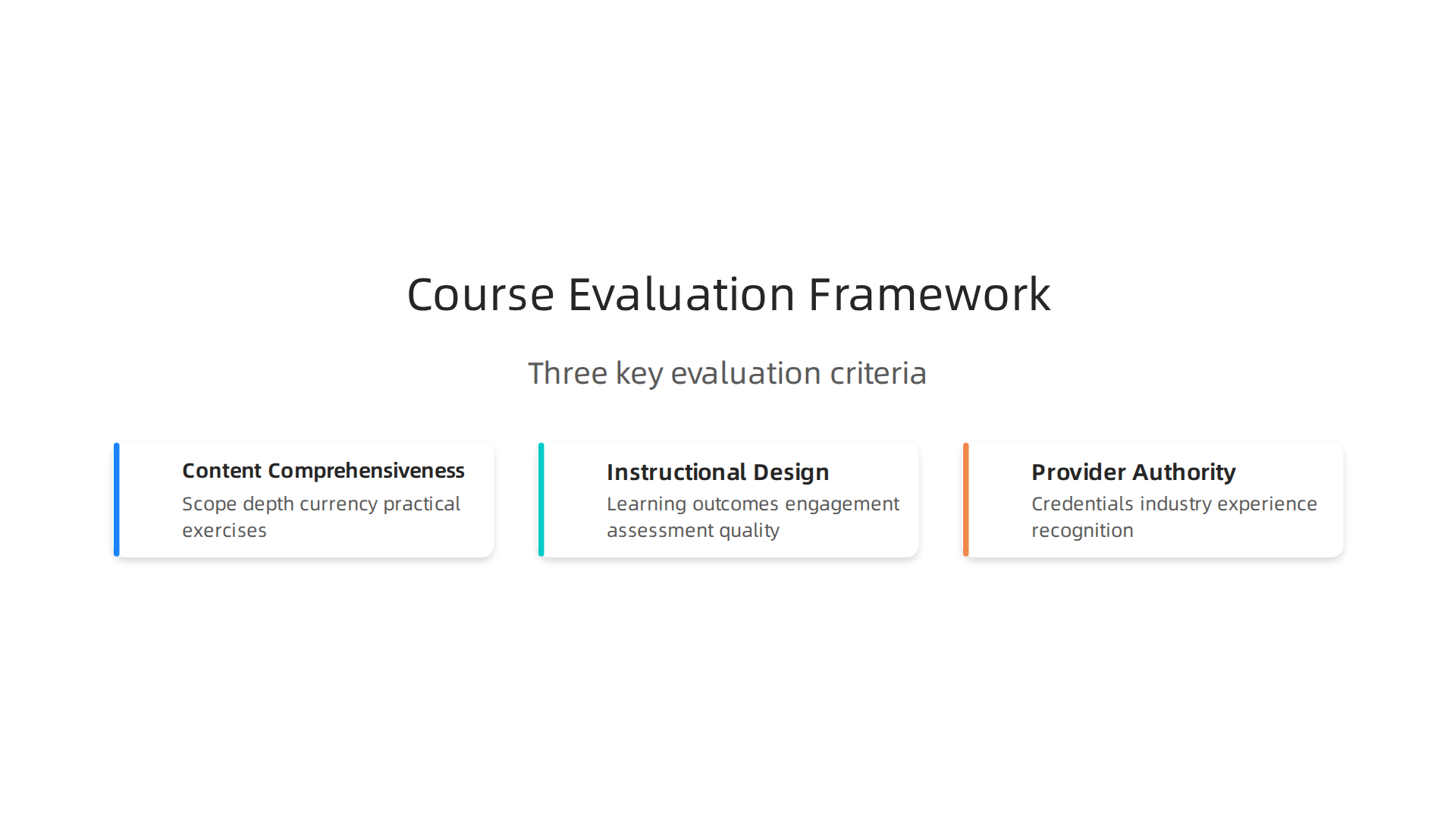
1. Content Comprehensiveness: Theory Must Meet Practice
A great curriculum covers the "what" and the "how." It balances the theory of blockchain with the practical, actionable steps for safety. Look for courses that explain concepts and then directly connect them to real-world behavior.
For example, a lesson on private keys should immediately be followed by a step-by-step guide on secure storage. A module on the new SEC and CFTC guidance for 2026 should explain what it means for an everyday user’s wallet choices.
Avoid courses that only prepare someone for a cryptocurrency certification consortium exam or a blockchain interview without teaching security. While career knowledge is valuable, your primary goal under the new regulatory lens is risk mitigation and informed participation. Courses that include practical security playbooks, like those discussed in resources such as Zero Crypto at Home: A Security Playbook for 2026, align with this need.
2. Instructional Design: Is It Actually Understandable?
The best information is useless if it is not absorbed. Look for clear, simple language over technical jargon. The course should be designed for learning, not just information dumping.
Key signs of good design:
- It uses plain-English explanations and relatable analogies.
- It breaks complex processes into small, manageable steps.
- It includes visuals, diagrams, or short videos to illustrate points. A well-made blockchain course 2026 tutorial video can be very effective.
- It offers summaries or checklists that reinforce key takeaways, similar to a security first checklist.
This approach ensures the material is accessible, which directly supports your "fair treatment" obligation by making sure users can actually comprehend the risks and best practices.
3. Credential & Provider Authority: Who is Behind the Course?
Credibility is everything. An endorsement from a recognized institution or a trusted expert carries weight with both your users and regulators. Assess the source.
- Instructor Expertise: Are the teachers industry practitioners with real experience, or just theorists? Look for instructors who have navigated both bull and bear markets.
- Provider Reputation: Is the course from a known platform like Coursera blockchain course, a reputable training organization, or a niche expert with a proven track record? Be wary of unknown providers with flashy sales pages.
- Accreditation & Recognition: While not always necessary, recognition from established bodies or alignment with industry standards adds a layer of trust. It shows the curriculum meets a certain benchmark of quality.
Remember, you are linking your brand’s credibility to this educational content. Sharing a resource from a highly credible source strengthens your position as a responsible operator.
Bringing It All Together: The Safety-First Filter
When reviewing options, from a master’s blockchain online program to a free online course for cryptocurrency, run them through a final, critical filter: Does this course make my user safer?
A course that excels in all three criteria will do more than teach. It will change behavior. It will turn a novice into a vigilant participant. For ongoing, digestible education that meets these standards, many organizations find value in partnering with dedicated educators. The free newsletter from Clicks and Trades, for instance, consistently breaks down complex topics into the simple, actionable steps that define good instructional design, helping users build safer habits over time.
By carefully selecting the educational resources you promote, you do more than check a compliance box. You build a more resilient, informed, and loyal community. You transform the regulatory requirement into a genuine competitive advantage.
Ready to see a model for simple, security-focused education? Sign Up for free, plain-English crypto security insights today and evaluate them against this framework.
Core Curriculum Components for Maximum Impact
Knowing the theory of a blockchain is one thing. Putting that knowledge into safe practice is another. The biggest risk in 2026 is not a lack of information. It is the gap between knowing what to do and actually doing it. Security research consistently shows a knowledge-behavior gap, where people understand the risks but fail to act. Your chosen blockchain course must bridge that gap.
The curriculum must move beyond abstract concepts to build automatic, safe habits. Here are the core components that turn knowledge into action.
The Non-Negotiable Safety Trio
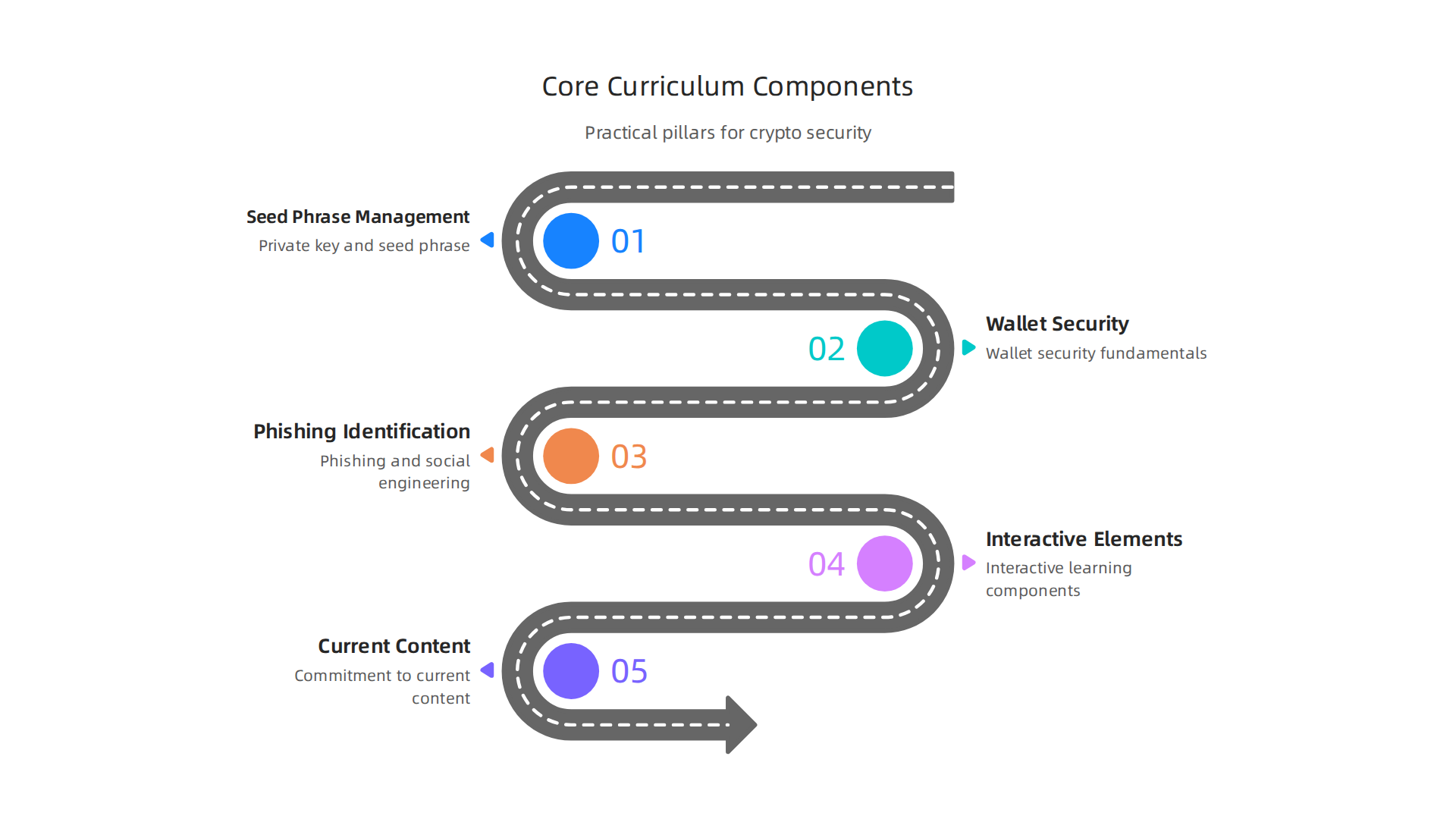
Every effective program in 2026 builds its foundation on three practical pillars. These are not just topics. They are skill sets.
-
Seed Phrase & Private Key Management: This is the master key to a user’s digital wealth. A great course does not just define a seed phrase. It walks the user through generating one securely, storing it offline (never digitally), and explains in plain language why this single step is more important than any password. It connects directly to resources like a practical security-first checklist for reinforcement.
-
Wallet Security Fundamentals: Users need to understand the different types of wallets (hot vs. cold, custodial vs. non-custodial) and the security trade-offs of each. The curriculum should guide them on selecting a wallet that matches their needs, enabling all available security features (like 2FA and transaction signing), and understanding why their wallet choices matter for long-term safety.
-
Phishing & Social Engineering Identification: Scams are the top threat. The course must train users to recognize the red flags: fake websites, spoofed emails, too-good-to-be-true offers, and urgent messages from "support." Use real-world examples and interactive quizzes to test their detection skills. Resources like the Zero Crypto at Home: A Security Playbook for 2026 video guide are excellent for showing these threats in action.
The Power of "Doing": Interactive Elements
Reading is passive. Doing is active. To ensure knowledge sticks, the course must include interactive assessments that simulate real decisions.
- Simulated Wallet Setup: A guided, safe environment where a user practices setting up a software wallet.
- Phishing Quiz: A series of realistic emails, texts, or websites where the user must identify which are scams.
- Transaction Review Drills: Presenting a transaction detail screen and asking the user to verify the recipient address and network before approving.
These exercises close the intention-action gap by creating muscle memory for safe behavior.
The Commitment to Current Content
A blockchain course from 2019 is a history lesson, not a safety guide. The technology and threat landscape evolve rapidly. A quality provider commits to regular updates.
Look for courses that:
- Reference 2026 regulations and standards.
- Cover new attack vectors like AI-powered phishing or smart contract exploits.
- Update their examples and case studies quarterly.
This shows the provider is invested in your users’ current safety, not just selling a static product. For ongoing, updated education that breaks down these evolving topics into simple steps, many learners rely on the free newsletter from Clicks and Trades. It delivers the kind of current, actionable advice that turns lessons into lasting safe habits.
By ensuring your recommended training includes these core components, you move your users from being informed to being protected.
Ready to see security education that focuses on these essential habits? Sign Up for free, plain-English crypto security insights that put practice first.
From Knowledge to Behavior: Ensuring Educational Outcomes Stick
You know the feeling. You finish a great blockchain course, you feel informed, but then real life happens. A confusing email pops up. You’re in a hurry to send crypto. Suddenly, the smart habits from the course feel fuzzy. This is the knowledge-behavior gap. It’s the space between knowing what’s safe and actually doing it. In 2026, closing this gap is the single most important goal of any effective education program.
Research shows that simply providing information is not enough to create lasting safe behavior. Studies point to a persistent knowledge-behaviour gap in security, where people understand risks but fail to act. Another model identifies a security-privacy knowledge gap that can stop people from using their knowledge. A great course gives you the map, but you need help walking the path every day.
So, how do you make the lessons from a blockchain training program stick for life? Here are proven strategies that move users from informed to protected.
Reinforcement: The Secret to Lasting Habits
Learning is not a one-time event. It’s a process that needs reinforcement. Your chosen educational program should include built-in strategies to keep safety top of mind.
- Smart Reminders: The best programs send periodic, bite-sized refreshers. Think a monthly email with one security tip, like checking a wallet’s permissions or a new example of a phishing scam. This isn’t spam. It’s a nudge that rebuilds the mental muscle memory for safety when it starts to fade.
- Community Support: Learning alone is hard. A course that offers access to a moderated forum or community allows users to ask questions, share experiences, and see real-world applications. When someone posts, "Is this website safe?" and the community helps spot the red flags, that’s powerful reinforcement for everyone. For organizations, fostering this peer support can be as crucial as the initial blockchain courses on Coursera.
- Scenario Updates: As mentioned earlier, threats evolve. Reinforcement means getting updated drills. A good provider will send new phishing quiz examples or transaction review drills that reflect the latest tactics used by scammers in 2026. This keeps the training relevant and sharp.
Measuring What Matters: Behavior Change, Not Test Scores
How do you know if education is working? The wrong metric is a final exam score. The right metric is a reduction in real-world incidents. When evaluating a blockchain course for your team or community, look for providers who think about measurement differently.
A quality program should help you track progress through behavioral indicators, not just knowledge checks. This could include:
- Simulation Success Rates: Are users getting better at spotting phishing attempts in regular, unannounced tests?
- Checklist Adoption: Are teams using provided tools, like a security-first checklist, in their routine?
- Reduced Support Tickets: This is a key business outcome. Are there fewer panicked calls about lost access or suspicious transactions? This directly ties to the organizational need to reduce operational costs.
The goal is to create a culture of safety, not just a list of graduates. When security becomes a regular topic of conversation—guided by ongoing education—the entire organization’s defense improves.
The Cycle of Continuous Learning
True security education never really ends. It’s a cycle: Learn, Practice, Reinforce, Measure, and Update. In 2026, the most dangerous course is a static one. You need a partner in education, not just a product.
This means choosing resources that are committed to the long term. For many, this involves supplementing formal courses with ongoing, plain-English guidance. Resources like the free newsletter from Clicks and Trades are designed for this exact purpose. They deliver current, actionable advice that turns one-time lessons into lifelong safe habits, helping to close that intention-action gap for good.
By focusing on these strategies—reinforcement, community, and behavioral measurement—you ensure your investment in a blockchain course pays off in the only way that counts: real-world safety and peace of mind.
Ready to build security habits that last? The first step is consistent, simple learning. Sign Up for free insights that help turn knowledge into everyday action.
Building Your Strategy: Integration and Measuring ROI
You have a plan to build lasting security habits. Now, you need a strategy to make it part of your organization’s fabric and prove its worth. In 2026, choosing a blockchain course is just the start. The real work is weaving that education into your daily operations and measuring the concrete return it delivers.
Three Paths to Integration
How you bring education to your team or users depends on your goals and resources. Here are the main options for 2026.
-
White-Labeling for Seamless Branding: For larger organizations or platforms, the most integrated approach is to white-label an educational program. This means you license quality content—like a curated set of blockchain courses on Coursera or custom modules—and deliver it under your own brand. It feels like a native part of your product or internal training portal. This builds immense trust and shows a deep commitment to user safety, directly addressing the organizational need to strengthen brand reputation.
-
Strategic Partnerships: You don’t have to build everything yourself. Forming a partnership with a specialized security education provider can be highly effective. You can offer their courses to your employees or community as a premium benefit. This is ideal for financial advisors, DAOs, or any business that wants to offer expert guidance without developing it in-house. It turns security into a value-added service.
-
Direct Referrals: Sometimes, the simplest way is the best. If you run a support team that frequently deals with security questions, having a trusted, vetted resource to refer people to is a lifesaver. Instead of directing users to random internet searches, you can point them to a specific blockchain course or a resource like a security-first checklist. This reduces your team’s burden while ensuring users get reliable information.
Measuring Success: The Right KPIs
As discussed earlier, test scores don’t pay the bills. You need to track Key Performance Indicators (KPIs) that reflect real-world safety and efficiency. Focus on these three areas in 2026.
-
Reduction in Support Tickets: This is your most tangible metric. Are fewer people contacting support about lost seed phrases, suspicious transactions, or access issues? A quality blockchain training program should lead to a measurable drop in these time-consuming and costly tickets. Studies show that effective training can reduce the risk of employee-driven incidents by up to 72%, which directly translates to fewer support fires to put out.
-
Decrease in Security Incidents: Track the frequency and severity of actual security breaches, phishing successes, or funds loss before and after the training initiative. This is the ultimate bottom-line metric for any cryptocurrency certification consortium or internal program.
-
Improvement in User Sentiment: Use surveys to gauge confidence. Do your employees or users feel more knowledgeable and secure? This improved sentiment reduces fear-driven errors and builds a stronger, more loyal community. It also helps with retaining valuable users and talent.
Calculating Tangible ROI
Now, for the numbers that get leadership to approve the budget. Calculating Return on Investment (ROI) moves security training from a "nice-to-have" to a clear business imperative.
The basic formula is straightforward:
ROI = (Total Benefits – Total Costs) / Total Costs x 100
But what goes into "Benefits"? In 2026, we look at avoided costs. Here is a simplified way to think about it:
| Cost Avoided (Benefit) | How Training Helps |
|---|---|
| Reduced Incident Response | Fewer hacks mean less money spent on forensic investigations, recovery efforts, and PR crisis management. |
| Lower Support Labor Costs | As ticket volume drops, your support team can handle more users or work on proactive projects. |
| Avoided Financial Loss | This is the big one. Preventing a single phishing attack or scam can save hundreds of thousands. One analysis found security programs can save an average of $177,708 in potential losses. |
| Reduced Downtime & Productivity Loss | Security incidents disrupt operations. Keeping systems and people safe maintains business continuity. |
When you add up these avoided costs and subtract the total price of your training program (course licenses, employee time), the ROI can be staggering. Some companies report seeing a 300% ROI from their investment. For a high-risk area like crypto, where mistakes are irreversible, the return isn’t just positive, it’s essential for survival.
Building your strategy is about making education work for your specific organization. By choosing the right integration path, tracking behavioral KPIs, and speaking the language of ROI, you transform a blockchain course from an expense into one of your smartest investments in 2026.
To keep this strategic mindset sharp with simple, ongoing tips, many professionals supplement their training with clear, regular guidance. Sources like the free newsletter from Clicks and Trades offer that consistent, plain-English advice to help turn strategic plans into daily reality.
Ready to build a strategy that delivers measurable safety and savings? Start by connecting with resources designed for long-term success. Sign Up for straightforward insights that help secure your organization’s future.
Summary
This article argues that crypto security education is a core business imperative for any organization that handles digital assets, because user mistakes—not just technical flaws—are now the largest operational risk. It explains how phishing, lost seed phrases, and social-engineering errors create direct costs (support, remediation, compensation) and long-term damage (brand erosion, regulatory scrutiny). The piece offers a practical framework for choosing and evaluating training—focusing on actionable content, understandable instructional design, and credible providers—and defines a core curriculum (seed phrase management, wallet choices, phishing detection) with interactive drills to close the knowledge-to-action gap. It also shows how to integrate education into operations (white-labeling, partnerships, referrals), measure ROI with business KPIs (fewer tickets, fewer incidents, improved sentiment), and use ongoing, plain-English resources to reinforce habits. After reading, leaders will know what to teach, how to pick or partner for that education, how to embed it into workflows, and how to measure the financial and reputational benefits.