

Why this guide matters now: safe, compliant crypto investing at scale
If your users or employees touch crypto today, you are already in the risk business.
Support teams see it every day:
- “Why is crypto crashing?” tickets
- “I lost my seed phrase” emergencies
- “Was this free crypto a scam?” chats
- Confusion about new meme coins, bubbles, and risky cryptocurrency projects
In 2026, crypto is not a niche topic anymore. Global adoption keeps growing, with countries like India and the United States leading retail use of digital assets, which raises real questions about safeguards and education for everyday users who are investing in cryptocurrency through apps, payroll, benefits, and new Web3 tools according to the Chainalysis Global Adoption Index.
At the same time, regulators are moving fast. Reviews of policy changes in dozens of major markets show that rules around customer protection, disclosures, and risk education are tightening across the globe, often after big loss events and fraud waves hit users first as summarized in the TRM Labs global crypto policy review.
This guide exists to help you get ahead of that curve.
From random crypto tips to a clear, safe program
Right now, many organizations rely on:
- scattered FAQs about the crypto definition and basic crypto terms
- ad hoc warnings when a new scam trend pops up
- stressed support agents trying to explain bubbles in crypto, doge cryptocurrency, or trump crypto tokens to angry or scared users
- last minute help when people ask “is crypto a security?” or “what happens to my pi crypto value on the pi network cryptocurrency?”
The result is predictable:
- more support tickets
- more security incidents
- confused and frustrated users
- pressure from compliance and legal teams
This guide turns that mess into something you can manage.
We will:
- explain the real benefits of cryptocurrency and the main risks in clear, non‑technical language
- walk through how markets work, why crypto bubbles form, and how to talk about “why is crypto crashing” without panic or hype
- give you simple, repeatable patterns for safe onboarding, so users understand wallets, seed phrases, and why wallet choices matter long before they click “deposit” or look up a crypto calculator
- show how to bring security basics into your workflows, from account setup to xrp ledger transactions and other on‑chain activity
If your team also has to decide which wallets to support or recommend, our separate guide on why wallet choices matter for organizations in 2026 can help you go even deeper on that piece.
Who this is for
This is a practical blueprint for anyone who must help others invest in cryptocurrency safely, including:
- crypto exchanges and platforms that want fewer security tickets and stronger user trust
- financial advisors who need simple, client‑ready crypto guides and language
- HR and security leaders who now see personal crypto as part of digital hygiene training
- Web3 and DAO teams that must protect new community members who chase free crypto, airdrops, or complex new cryptocurrency projects
You do not need to be a technical expert. You do need a clear, calm way to teach safe habits at scale.
What you will be able to do with this guide
As you work through this guide, you will learn how to:
- design simple, “shield‑first” onboarding flows that reduce scams and mistakes before they happen
- build consistent education on topics like wallets, seed phrases, phishing, bubbles crypto, and long term investing in cryptocurrency
- line up your risk language with compliance expectations in 2026, instead of scrambling after each new rule
- cut down on repeated “how do I keep my crypto safe?” tickets
- give your users or employees trusted, non‑hype resources so they are less likely to fall for memes and FOMO
If you want a steady stream of plain language education you can share with users or staff, you can also point them to the free Clicks and Trades newsletter. It offers step‑by‑step crypto guides, safety checklists, and clear examples that match the teaching style in this guide, which makes it easy for your organization to stay aligned on the basics.
When you are ready to bring stronger, user‑friendly crypto education into your organization, you can Sign Up to connect with the Clicks and Trades team and explore how these materials and workflows can fit your support, training, or onboarding programs.
Crypto assets 101: what you’re really buying
When someone is investing in cryptocurrency, they are not just “buying crypto.” They are picking a type of asset, with its own rules, risks, and rights. If your team can explain what a user is really buying, you cut down on “why is crypto crashing” panic and help people avoid the worst bubbles in crypto.
In 2026, big firms note that new cryptoassets and tokenization are now a normal part of investment products, not a side bet anymore, which makes clear explanations even more important for users who are not experts in crypto terms or law according to BlackRock’s 2026 trends report.
The main crypto asset types
You can think of most cryptocurrency projects as fitting into four buckets.
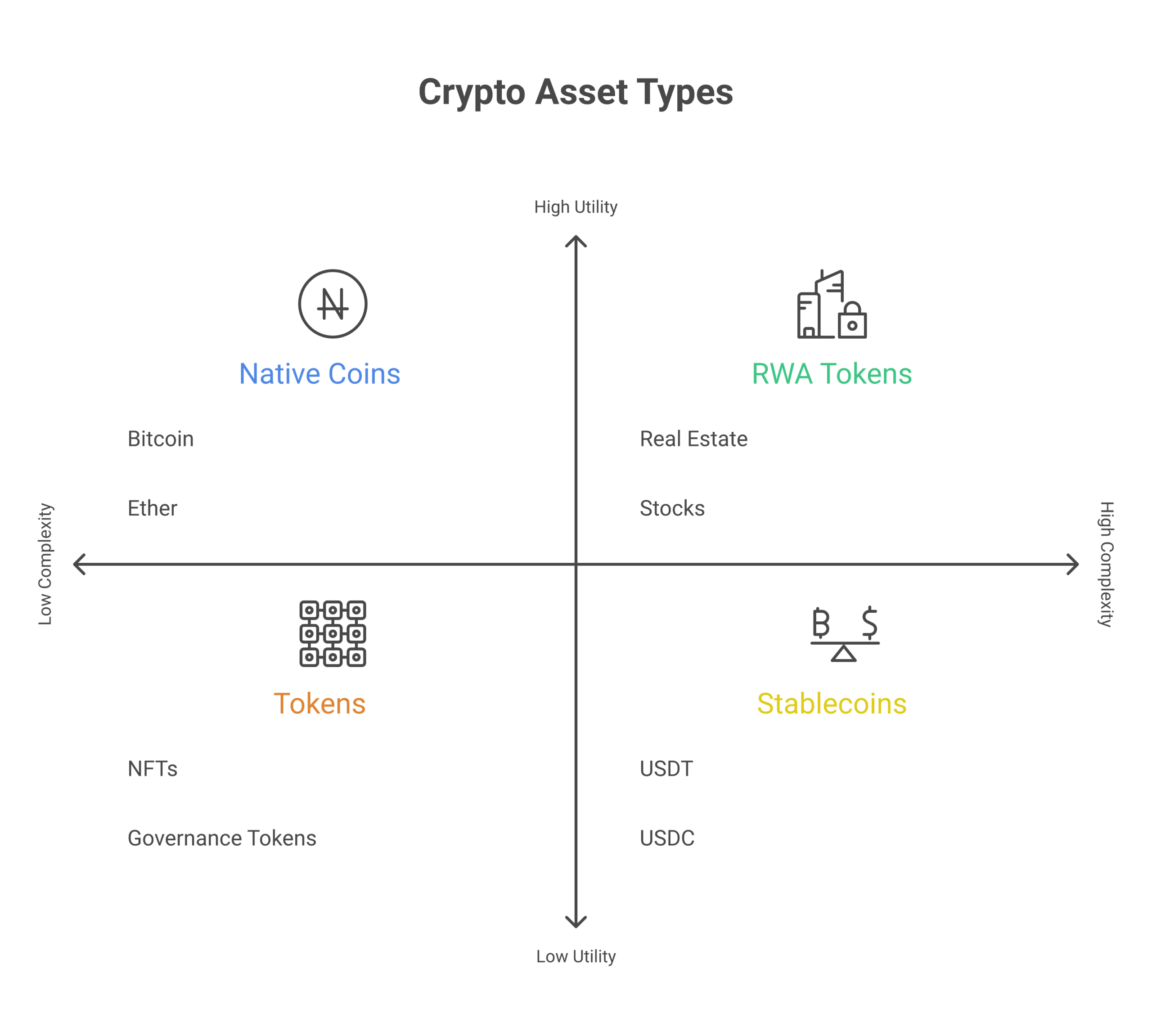 | Type | Simple idea | Key risks to explain |
| — | — | — |
| Native coins | The main coin of a blockchain, like a “fuel” for the network | Market swings, tech bugs, network fees |
| Tokens | Built on top of a chain, like tickets inside an app or game | Project failure, low liquidity, governance risks |
| Stablecoins | Tokens that try to track a price, often 1 dollar | Peg break, reserves, counterparty risk |
| Real world asset (RWA) tokens | Tokens that claim to link to stocks, bonds, real estate, or funds | Legal claims, custody of the real asset, disclosure risk |
Native coins
Examples are bitcoin and ether. When users buy these, they get exposure to the base protocol. That is different from holding a meme token like doge cryptocurrency or a trending trump crypto coin that rides hype and can feed crypto bubbles.
Tokens
Many users think “a token is a share.” Not always. A token might give:
- access to a service
- voting rights in a DAO (governance)
- rewards for staking or helping run the network
- collateral use inside DeFi
Your materials should say clearly what this token does and does not do, and never blur that line with stock language like “ownership” if that is not true. This matters when people ask “is crypto a security?” because some tokens might fall under securities rules in a given country.
Stablecoins
People often treat stablecoins like cash, then get shocked when a peg slips. Your guides should cover:
- what backs the coin, cash, bonds, crypto, or nothing clear
- who holds those reserves
- what happens if that issuer fails
RWA tokens
Tokenized funds and bonds are rising fast. For users, the key question is, “What claim do I really have?” If the token only gives “economic exposure” and not legal ownership, that must be spelled out.
Layers, utility, and why that matters for risk
Different layers and uses change risk and return.
- Layer 1 (L1) is the base chain, like a main road
- Layer 2 (L2) sits on top, like a flyover road that makes things faster and cheaper
If a user buys an L2 token, they are not just betting on the base chain, they also take on extra smart contract and bridge risk. That helps explain why some assets drop harder in a stress event, even when bitcoin looks more stable than in older cycles as seen in a 2026 market outlook from 21Shares.
You can also sort tokens by what they are used for:
- Governance, voting on changes
- Payments, sending value
- Staking, helping secure a network in return for rewards
- Collateral, locking tokens to borrow or trade more
When users know the main utility, they can set better expectations. A pure governance token in a small app will not act like a blue chip coin, and its price may swing wildly in crypto bubbles or crashes.
What does this asset actually represent?
For safe onboarding, every asset you list or support should have a short, plain answer to three questions:
-
Is this direct protocol exposure?
For example, holding ether means direct exposure to the Ethereum network. -
Is it wrapped exposure?
A wrapped bitcoin token on another chain adds smart contract and bridge risk on top of bitcoin price risk. If there is a hack in that bridge, the user can lose value even if bitcoin itself does fine. -
Is there a claim on something real?
If a token claims to track real world assets, users need to know:- who holds the real asset
- what their legal claim is, if any
- where to read those terms
This clarity feeds into your disclosures, your suitability checks, and your scripts for support teams that must answer “what did I actually buy?” when markets move.
You can pair these basics with wallet education so users also grasp how custody and keys change their risk. For deeper help, see why wallet choices matter for organizations in 2026, then plug those lessons into your own crypto guides and training paths.
If your team wants simple, ready to share explainers on asset types, layers, and risk, the free Clicks and Trades newsletter offers beginner friendly breakdowns you can reuse in onboarding emails or FAQs.
When you feel ready to bring structured, shield first education into your flows at scale, you can Sign Up to talk with the Clicks and Trades team about fitting these lessons into your support, compliance, or HR programs.
How to start investing in cryptocurrency safely: a security‑first workflow
If people in your company start investing in cryptocurrency with no plan, small mistakes can turn into big losses. In 2026, crypto crime and phishing scams keep rising, which means you cannot treat security as a “nice to have” anymore when you offer crypto access or education to users or staff as seen in recent crypto crime data.
A simple security‑first workflow helps you:
- lower support tickets
- protect your brand
- keep users calm when markets swing or crypto bubbles pop
Here is a step by step path you can turn into policy, training, and checklists.
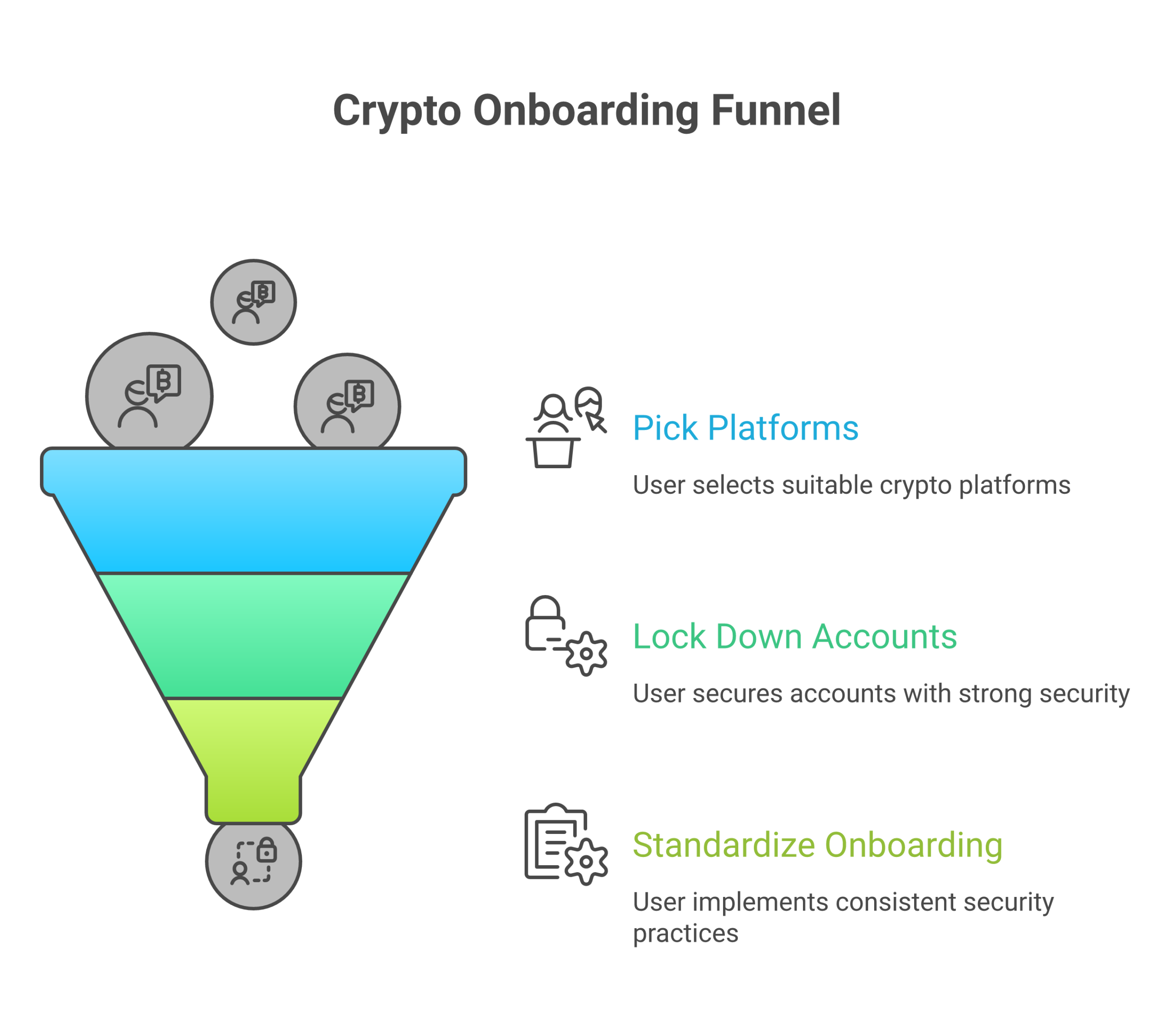 ### 1. Pick platforms that fit your risk and your people
Not every team needs the same setup. Start with two questions:
- How much risk can your organization accept?
- How much can you expect the average user to handle on their own?
Then match platforms and wallets to that reality.
Custodial platforms
These hold keys for the user, like a bank for crypto.
- Easier for beginners
- Password resets and support are possible
- Platform faces hacks or legal risk
Look for:
- clear risk and fee disclosures
- strong identity checks
- transparent rules for frozen accounts and outages
Self‑custody wallets
Here the user holds the keys. This gives more control and can avoid some counterparty risk, but it also means no one can fix a lost seed phrase.
- Better for advanced users or staff who get extra training
- Needs clear rules on device safety and backup
- Must match your ability to support problems
If you are unsure which way to lean, review why wallet choices matter for organizations in 2026 and build your own “when to use what” matrix.
Many teams use a mix:
- custodial accounts for small, frequent activity
- self‑custody for longer term holds and larger values
2. Lock down accounts and devices from day one
Most losses do not come from fancy code hacks. They come from simple tricks. In early 2026, phishing attacks stole far more from investors as scams grew more targeted and clever according to a report on new phishing trends.
Make the following non‑negotiable:
Strong login rules
- Use a password manager, no shared passwords in chat or email
- Turn on app based 2FA for every crypto account, never SMS alone
- Use allow‑lists for withdrawal addresses on platforms that support it
Clean, safe devices
- Keep systems and browsers updated
- Use one “clean” browser profile just for finance and crypto
- Block unknown browser extensions on work devices
Seed phrase and key rules
Teach a very simple crypto definition in training:
“If someone has your seed phrase, they have your money.”
Set policies such as:
- Never type a seed phrase into a website form
- Never store seed phrases in email, cloud docs, or chat
- Use paper or engraved metal, kept in two safe places
- For key staff, require a second person to confirm how and where a backup is stored
You can use simple examples like doge cryptocurrency, trump crypto coins, or pi network cryptocurrency to show how people chase “free crypto” or quick pi crypto value, then lose it all to a fake wallet download or phishing link. This keeps the lesson real and makes the benefits of cryptocurrency feel tied to safe behavior, not just price hype.
If you do not have time to write all these rules from scratch, you can point users to the free Clicks and Trades newsletter for short, ready to use crypto guides on passwords, seed phrases, and phishing checks.
3. Standardize your onboarding so mistakes do not scale
When you serve many users, one confusing screen can mean hundreds of “why is crypto crashing” tickets or worse, the same mistake copied again and again.
Create one simple, repeatable workflow:
-
Pre‑check
- Explain what crypto investing is and is not, in very short language
- Point to basic crypto terms and a simple crypto calculator, so people can see how small price moves change value
-
Step‑by‑step setup
Turn this into a checklist or short script:
- Pick platform type (custodial or self‑custody) based on risk rules
- Turn on 2FA
- Save seed phrase with your standard method
- Do a tiny test transaction first, for users who move funds in or out
-
First trade guardrails
Help users avoid classic bubbles in crypto:
- Start with small amounts in simple assets, not meme coins or thin tokens
- Explain that some trending coins, like new trump crypto or small meme cryptocurrency projects, can drop fast in bubbles crypto cycles
- Show how to check fees and slippage before clicking “buy”
You can also add small scripts for common support questions such as “is crypto a security” for a given asset, or why some ledger xrp or xrp ledger transactions might take longer at peak times.
Train staff to reuse the same language in email, chat, and video. This keeps guidance simple and cuts guesswork. For teams that want plain, reusable content, the Clicks and Trades newsletter is a gentle way to keep everyone supplied with fresh examples and user friendly crypto guides.
When your organization is ready to turn this into a full shield‑first program, with clear checklists and workflows for every role, you can Sign Up to talk with the Clicks and Trades team about fitting structured security education into your support, compliance, or HR training paths.
The 2026 crypto threat landscape: top user risks
When people start investing in cryptocurrency, most are scared of “big hacks.” In 2026, the bigger danger is simple tricks that target your people, not your code.
A recent report showed crypto phishing losses jumped over 200 percent in early 2026, as scammers shifted to smarter, more targeted attacks against everyday investors and staff, not just “whales” with huge balances

Here are the top risks you should plan for.
1. Phishing, fake support, and approval scams
These are now the most common ways users lose money:
- Fake sites and apps that copy real platforms, then steal logins or seed phrases
- Impersonation of support or “security teams” on chat, email, or social media
- Approval scams, where a user is tricked into signing one “harmless” crypto transaction that gives the attacker full spending rights on a wallet as seen in recent exploit reports
This hits all kinds of cryptocurrency projects, from simple meme coins like doge cryptocurrency to more complex DeFi tools. It often shows up when users chase “free crypto” or jump into new trump crypto tokens without basic checks.
2. Malware that hunts seed phrases
Modern malware does more than log keys. In 2026, many strains are built to watch for:
- Seed phrases
- Private keys
- Screens with QR codes or wallet addresses
They can spread through fake “crypto calculator” apps, cracked trading tools, or “boost your pi crypto value” scripts that promise easy gains from pi network cryptocurrency. Some malware also swaps copied addresses to steal ledger xrp or other tokens during xrp ledger transactions as covered in current scam overviews.
3. SIM swaps and social tricks around recovery
SIM swap and social engineering attacks are rising, because they target the human side of recovery flows:
- A scammer convinces a phone company to move a number to their SIM
- They reset logins and bypass weak 2FA
- They call or message as “internal IT” or “compliance” to rush the victim
These attacks often show up in bubble periods, when crypto bubbles and sharp drops lead to more “urgent” questions like “why is crypto crashing” and users feel pressure to act fast. In that panic, people forget every crypto definition and rule you taught them.
To lower these risks, your training has to match your tools. If you ask staff to use self custody, pair it with clear wallet rules and simple guides. You can point teams to resources like the free Clicks and Trades newsletter for short, non technical crypto guides that explain phishing, SIM swaps, and scams in plain language.
If you want a deeper, shield first program for your whole organization, with workflows that fit your wallet setup and risk rules, you can also Sign Up to explore how structured education from partners like Shield My Crypto can sit next to your existing policies and help your users invest in cryptocurrency with less fear and fewer mistakes.
Paths to exposure: direct, funds, and DeFi compared
When you start investing in cryptocurrency, you do not just pick a coin. You also pick how you hold it. That path changes your risk, your work, and your team’s training needs.
Below is a simple view of three main paths.
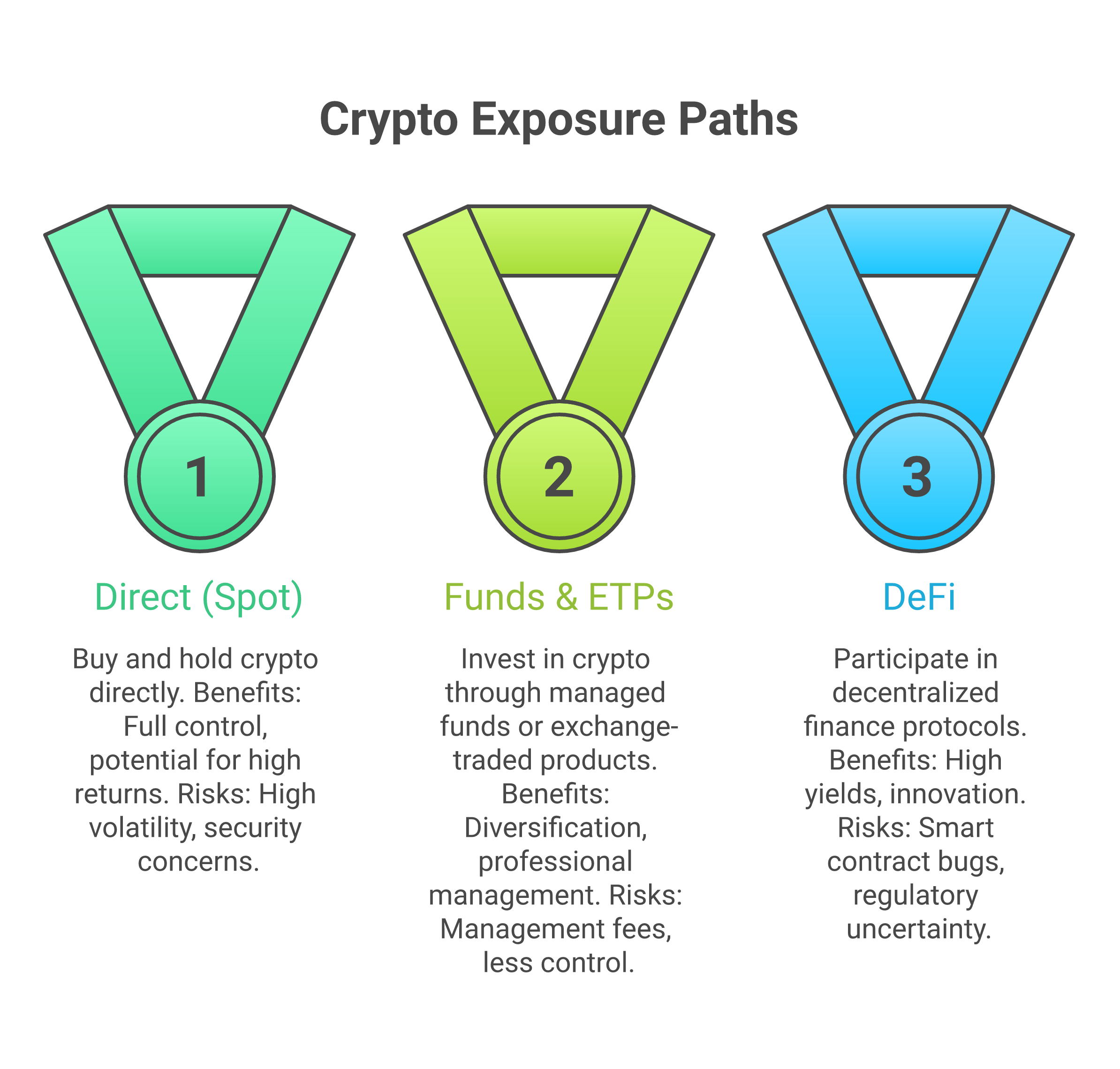 | Path to crypto | What it means | Main benefits | Main risks |
| — | — | — | — |
| Direct (spot) | You buy coins or tokens and hold them yourself | High control, can use DeFi, no fund fee | Custody mistakes, phishing, lost keys |
| Funds & ETPs | You buy a listed product that tracks crypto | Simple access, easier reports | Extra fees, tracking gaps, platform risk |
| DeFi strategies | You put coins into smart contracts | Yield, early access to new tools | Smart contract bugs, liquidity loss, scams |
1. Direct exposure: full control, full custody work
Direct exposure means you or your staff hold the real assets. It might be bitcoin, stablecoins, doge cryptocurrency, or newer tokens from small cryptocurrency projects and hype cycles like trump crypto.
Key points:
- You can move coins at any time
- You can join DeFi, staking, or test tools that might change pi crypto value or other yields
- You own the keys, so you carry the loss if things go wrong
Direct exposure lets you feel the full benefits of cryptocurrency, like fast settlement and self custody. But it also puts you right in front of all the user risks from the last section, such as fake “free crypto” offers, approval scams, and malware that hunts seed phrases.
For an organization, wallet design matters a lot here. Choices like self custody, custodial accounts, or multi sig change how easy it is for a single phishing link to drain funds. If your team is already debating “is crypto a security” and learning new crypto terms, it is a good time to teach wallet rules too. You can use guides like why wallet choices matter for organizations in 2026 to shape a clear policy before you scale holdings.
In 2026, large firms see more products that mix direct and traditional tools, as tokenization helps bridge old markets and DeFi for everyday investors, not just crypto natives, which big managers note in their 2026 trends on new investment products.
2. Funds and exchange traded products: simpler, but not “no risk”
Some teams do not want to touch private keys at all. They choose:
- Crypto ETFs or ETNs
- Listed funds that track bitcoin or a basket of coins
- Notes or trusts that hold crypto in the background
Here, you get price exposure without running wallets. That can help in stressful markets, when people ask “why is crypto crashing” or search about crypto bubbles or bubbles crypto, and you want clean reports and simple tax records. Many of these products also provide more standard reporting and can sit inside normal brokerage accounts, which some leaders find easier to oversee.
But there are trade offs:
- You pay fees on top, which can eat into long term benefits of cryptocurrency
- Product price can drift from the crypto it tracks
- You rely on the platform’s own security and compliance
Market reports in 2026 show that even with these products, crypto is still very volatile compared to many other assets, so sharp moves and sudden drawdowns are still possible for fund buyers, not only coin holders, as seen in recent monthly crypto market insights.
For staff education, this path reduces seed phrase risk but does not erase user mistakes. Phishing, fake support, and SIM swap attacks still hit brokerage, exchange, or bank accounts tied to crypto funds.
3. DeFi strategies: extra yield, extra moving parts
DeFi is where many teams see new ways to grow returns on idle coins:
- Staking tokens to help secure networks
- Lending coins to earn interest
- Providing liquidity to pools that power trading
These can look very attractive in bull runs and crypto bubbles. But they come with new types of exposure on top of price risk:
- Smart contract risk: bugs or exploits in code
- Liquidity risk: you may not be able to exit a pool fast in a rush
- Counterparty risk: bridges, or small teams, can fail or run off
When coins sit in DeFi contracts, one bad approval or a fake site can drain not just your spot holdings, but your yield positions too. That is why your training and wallet setup must be joined, not separate. For example, rules for xrp ledger transactions or handling ledger xrp should cover how staff copy addresses, read approvals, and treat new “crypto calculator” tools that promise easy gains.
If your people are still learning the basic crypto definition, DeFi adds another layer of new crypto terms and habits to learn. In this case, short, plain crypto guides and newsletters from Clicks and Trades can help non experts keep up with staking, lending, and new token launches without falling for “too good to be true” yields.
How to pick a path that fits your risk
Most organizations blend these paths:
- A core slice in simple listed products
- Some spot holdings for strategic assets
- Carefully sized DeFi exposure, if any
Your mix should match:
- How much loss your group can handle in a crash
- How strong your internal wallet skills are
- How ready your people are to spot scams in day to day work
Getting this wrong can be as costly as picking the wrong coin. Before you grow any exposure path, make sure your people know how to move slow, double check claims of “free crypto,” and ask questions when they see new offers around doge cryptocurrency, pi network cryptocurrency, or trending trump crypto tokens.
If you want support to set this up for a whole team or client base, with clear checklists and non scary language, partners like Shield My Crypto can help you build a “shield first” program that sits next to your existing crypto policy. You can Sign Up to explore structured training for your staff, and also share the free Clicks and Trades newsletter with them so they get steady, simple updates on safer investing in cryptocurrency over time.
Risk management fundamentals for digital assets
When you start investing in cryptocurrency, the hard part is not just “what to buy.” It is “how much, where, and what if it breaks.” Risk rules keep crypto from taking over your whole balance sheet when markets jump or crash.
 In 2026, even small crypto slices can change how a full portfolio behaves, since bitcoin and other coins still move a lot compared with stocks and bonds, as large managers note in their research on crypto in portfolios. Clear rules help you use the benefits of cryptocurrency without letting crypto bubbles, hype around trump crypto, or same day panic about “why is crypto crashing” drive big mistakes.
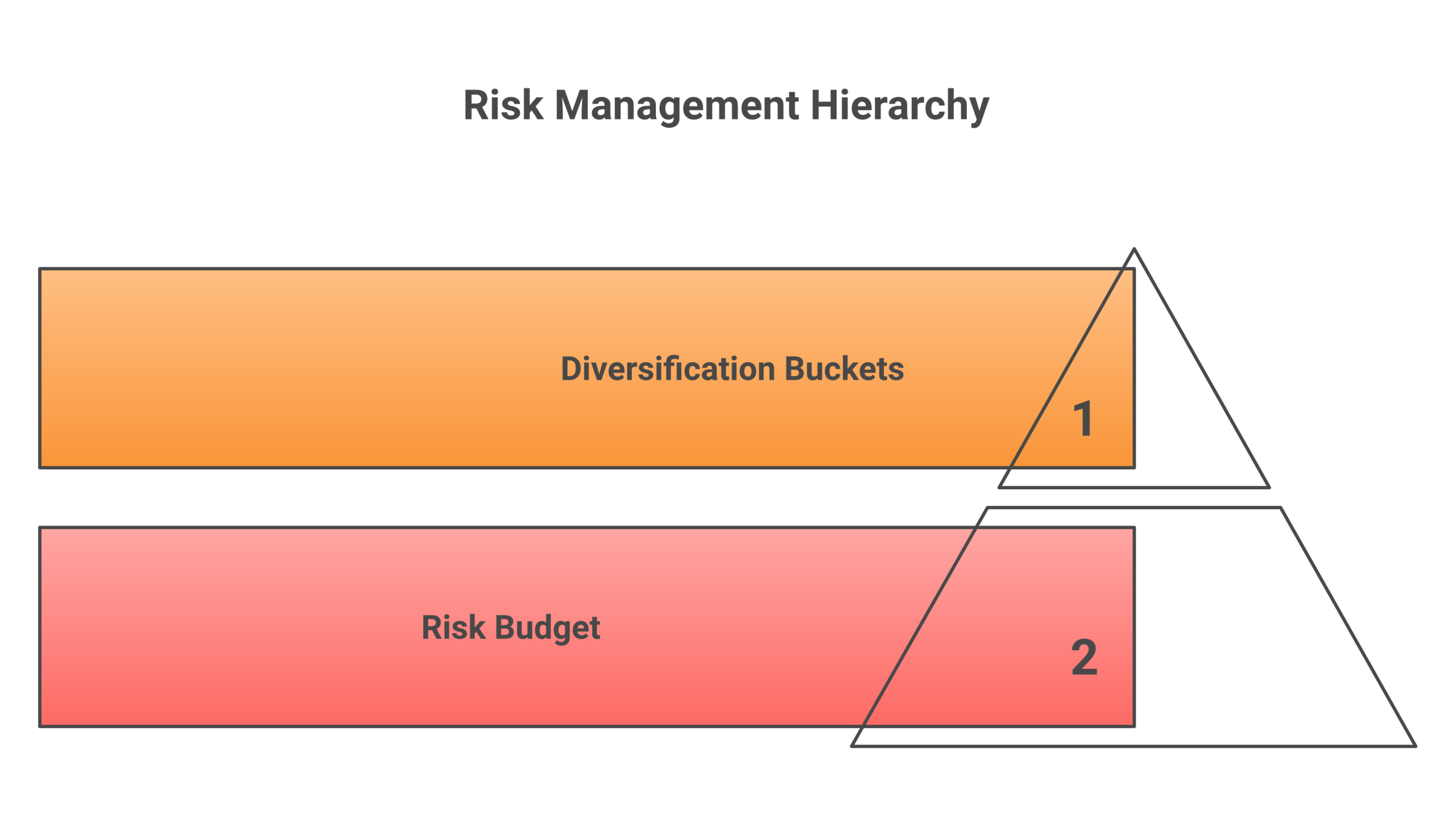
1. Set a risk budget before you add coins
A risk budget is a simple line: “this is how much total pain we accept from crypto.”
You can break it into three small rules:
-
Max portfolio share
Decide what share of your total assets can sit in digital assets, for example 1 to 5 percent.
That slice should include doge cryptocurrency, pi network cryptocurrency, stablecoins, DeFi, and any crypto funds, not just one coin you watch on a crypto calculator. -
Max loss per coin or project
For each coin or group of cryptocurrency projects, decide the biggest loss you accept.
A simple rule: never put more in one token than you are willing to see drop to near zero if a bug, delist, or hack hits. -
Max loss per year from all crypto
Set a line for drawdown, such as “if our total crypto drops 40 percent from its peak, we review and may cut risk.”
This keeps you from adding more risk during bubbles crypto phases or chasing “free crypto” offers to “win it back.”
Studies on crypto in mixed portfolios show that controlled, small allocations can improve long term results, but large, unplanned slices can raise risk a lot for the same return, which is why planners stress clear sizing rules in crypto portfolio research.
2. Use position sizing and rebalancing to tame swings
Once you know your risk budget, you need simple guard rails for each position.
Position sizing basics
Keep position sizes small and even, instead of one huge bet. For example:
- Core assets like bitcoin or ether: medium size
- “Story coins” tied to new tech (L1/L2, infra) or hype like trump crypto: small size
- Very new bets or coins your team can barely give a clear crypto definition for: tiny “test only” size
If a token is hard to explain in plain crypto terms, or you are not sure “is crypto a security” for that asset in your area, it should never be a big slice.
Rebalancing rules
Rebalancing means you sometimes sell a bit of what went up and add to what went down, to keep your target mix.
Set rules such as:
- How often you check, for example each month or each quarter
- A band, for example “if any coin drifts more than 2 percent from target, we trim or add”
- What to do in stress, for example “if bitcoin doubles, we take profit to our base weight, not chase more”
You can put these in a tiny one page policy, right next to your wallet rules and your wallet choices guide for organizations.
If you want simple, ongoing help for staff on ideas like risk budgets and rebalancing, the free newsletter from Clicks and Trades shares step by step crypto guides in plain language, which can help your team build steady habits, not react to every headline.
3. Diversify by idea, not by token count
Having 50 coins is not real safety if they all depend on the same thing. Better diversification in digital assets means different “jobs” in your mix, not just more ticker symbols.
Think in simple “buckets” like:
-
Core money layer
- Major L1 blockchains with long track records
- Very liquid assets you can exit fast
-
Scaling and tools layer
- L2 networks, infra tokens, or base tokens tied to smart contract platforms
- Assets that support DeFi tools, wallets, or on chain data
-
Cash and stable layer
- Different stablecoin types, for example one backed by cash, one overcollateralized on chain
- Rules so no single stablecoin, bridge, or bank is a single point of failure
-
Experiment layer
- New cryptocurrency projects, doge cryptocurrency, pi crypto value bets, and other trend coins
- Only with tiny size, clear exit plans, and strict staff rules about not trusting “free crypto” airdrops
You can also spread where you hold assets:
- Part in direct wallets, with strong self custody
- Part in funds or ETPs
- Part, if you choose, in DeFi, with clear size caps
Research on optimal crypto portfolios shows that mixing assets with different roles and behaviors can smooth results compared with holding a single token alone, even when each coin is still volatile on its own, as seen in recent crypto portfolio work.
4. Build simple incident playbooks before trouble hits
A good risk plan also answers “what if” in clear steps. In crypto, the big “what ifs” are:
- A hack or suspected wallet breach
- A failed or stuck transaction, such as xrp ledger transactions that do not match what staff expect
- A stablecoin depeg
- A big, sudden drawdown during crypto bubbles unwinding
For each type of incident, write a short playbook that covers:
-
Stop rules
- When to freeze new transactions
- Which wallets or DeFi tools to pause
- How fast to move assets to safer storage, such as cold wallets or multi sig
-
Check steps
- Who reviews logs or ledger xrp records
- How to confirm if a failed transaction is stuck, lost, or just delayed
- How to tell if a depeg is short term noise or a deep problem
-
Contact and roles
- Who is the first call or chat, inside your team
- Who talks to clients, users, or partners
- When to bring in outside legal or compliance support
-
Communication templates
- Simple, calm messages for users and staff
- Clear next steps, such as “do not click any links that claim to fix this”
- Estimates for when you will share the next update
Good playbooks lower panic and protect trust, even in rough markets. They also help your support or HR teams answer the same questions the same way when people ask “why is crypto crashing” or worry about bubbles crypto in the news.
If you want help turning these ideas into easy checklists and staff lessons, you can Sign Up to explore a “shield first” training program with partners like Shield My Crypto. You can also share the free Clicks and Trades newsletter with your team so they get simple crypto guides, risk tips, and safety reminders over time, instead of trying to learn everything in one long workshop.
5. Behavioral traps and decision hygiene
The market is already wild. Our own habits can make it feel even wilder.
Studies on crypto in portfolios show that the raw price swings are high on their own, even before we add human bias on top of it, which is why many firms warn about strict rules when allocating to cryptocurrency. Good “decision hygiene” helps you keep most of the gains from investing in cryptocurrency without turning every headline into a trade.
Common traps that pump up risk
-
Overtrading
Jumping in and out all day because a crypto calculator shows tiny moves or a tweet mentions trump crypto or doge cryptocurrency.
Each click adds fees, slippage, and stress, so your real results often look worse than if you had just held your plan. -
FOMO and FUD
FOMO means fear of missing out during crypto bubbles or “free crypto” hype.
FUD means fear, uncertainty, and doubt during sharp drops when people ask “why is crypto crashing” and rush to sell.
Both can push you to ignore your risk budget and chase short term moves. -
Anchoring
Fixing on one past price, such as “I will not sell this pi network cryptocurrency until it gets back to X” or “this is my pi crypto value forever.”
Anchors can keep you stuck in weak cryptocurrency projects long after the facts change.
Simple decision hygiene tools
You can cut these traps with a few small habits:
-
Precommitment rules
Write down, in plain crypto terms, why you hold each asset, your max size, and clear exit rules.
For example, “If this token drops 30 percent from my entry and there is no clear bug fix, I cut half.” -
Alerts instead of watching all day
Set price and news alerts so you do not stare at charts or every move in ledger xrp or xrp ledger transactions.
Fewer check ins can mean fewer impulse trades. -
Rule based automation
Use features like auto DCA, auto rebalancing, or preset sell levels, so you act on your plan, not your mood.
In 2026, many tools use AI to help with rules and sizing, which can support steadier choices if you keep them simple and transparent.
If your team needs help turning these ideas into easy habits, the free newsletter from Clicks and Trades shares short, clear crypto guides that teach risk rules, not hype. It also pairs well with wallet safety work, such as the guidance in this wallet choices guide for organizations.
When you are ready to build calm, rule based training for your staff or users, you can also Sign Up to explore a “shield first” program with partners like Shield My Crypto, so better decisions and better security grow side by side.
6. Market structure and cycles: what drives crypto prices
When you are investing in cryptocurrency, it can feel like prices move for no reason. One day it is “free crypto” hype and trump crypto memes. The next day people ask “why is crypto crashing” as charts fall. Under the noise, there are real forces that push prices up and down.
Let’s keep it simple.
1. Liquidity and new supply
First, think about how much money can flow in and out.
Liquidity cycles
When there is more cash in the system and more risk taking, people buy more coins and tokens. When money gets tight, they pull back.
- Loose central bank policy and low rates often help risk assets
- Tighter policy and stress can hurt, and bubbles crypto can pop faster
Big funds matter too. In recent years, more institutions have moved into digital assets, and many plan to put a larger share of their money into them, which can increase demand in each up cycle as long as they stay invested over time.
Reports on tokenization and real world assets also show that more traditional firms expect big growth in digital asset markets in the next few years, which can support deeper liquidity across cycles as new products launch and more capital arrives.[^1]
Issuance schedules
Each coin or token has its own rules for new supply.
- Some, like bitcoin, cut new supply over time
- Others pay high rewards, which adds more tokens into the market
- Some cryptocurrency projects sell team or investor tokens after lockups end
When a lot of new supply hits at once, it can weigh on price. When supply drops and demand stays strong, you can get sharp moves up and strong crypto bubbles.
If you use a simple crypto calculator, try to look past the daily number and ask: “Is new supply rising or falling this year, and who gets it?”
2. Real demand and product use
Price also comes from real use and real need.
Demand “spark” events
Tokens often move around clear demand triggers, such as:
- A major app or chain integration
- Good product market fit for a key use case
- New payment, gaming, or stablecoin flows
- Regulatory clarity in a big country
For example, global studies show that crypto use keeps spreading in many regions, with strong growth in big markets like India and the United States, which supports long term use beyond trading.[^2]
On the other side, many tokens with no clear use case trade only on hype. They can shoot up, like meme coins such as doge cryptocurrency, then drop hard when interest fades.
When you look at any asset, ask in plain crypto terms:
- What real problem does this solve?
- Who are the users today?
- Is use growing, flat, or shrinking?
If you cannot explain that in one or two short lines, the risk may be closer to lottery tickets than to the benefits of cryptocurrency you want in a calm plan.
3. Macro links: sometimes “risk asset,” sometimes its own thing
Crypto does not always move with stocks or bonds. The link can change:
- In some periods, bitcoin and large caps trade like high risk tech stocks
- In other times, they move more on crypto specific news, like rules, hacks, or forks
Policy and laws matter here. Reviews of global crypto policy show that new rules in large regions can shift flows quickly, by making some tokens easier or harder to hold.[^3] New rules can also affect questions like “is crypto a security,” which shapes how and where assets can trade.
Instead of one forecast, use scenarios when investing in cryptocurrency:
- “If the global economy slows and rates stay high, I expect X”
- “If rates fall and more spot ETFs launch, I expect Y”
- “If my base case is wrong, my max loss is Z”
You do not have to predict the future. You do need a map for more than one path.
4. On‑chain signals: useful, but never alone
On‑chain data lets you see what is really happening on a network, not just in price.
Common on‑chain indicators include:
-
Activity
Number of wallet addresses, transactions, and fees. For example, tracking real transfers and xrp ledger transactions can help you see if use of ledger xrp is growing or stalling. -
Holder groups
How much supply sits with long term holders versus new short term traders. -
Realized metrics
Price levels where big groups last bought, which can show rough zones of stress or comfort.
These tools can help you avoid some weak cryptocurrency projects and spot healthier ones. Reports on network health, such as studies of bitcoin nodes and usage, show that deeper networks with more active participants often stand up better to shocks than thin, low use chains.[^4]
Still, no single metric gives you a magic crypto definition of “cheap” or “expensive.” Bots, spam, and wash trades can fake activity. Use on‑chain data as context, not a trigger by itself.
5. Putting it together for calmer choices
When you mix these layers, you can see that most price moves are not random:
- Liquidity and new supply set the backdrop
- Real demand and product fit choose the winners and losers
- Macro and rules shift flows across whole sectors
- On‑chain data helps you check if the story matches real use
This frame will not stop drawdowns, and it will not save you from every crypto bubble. It can, however, help you spend less time chasing pi network cryptocurrency rumors or staring at your pi crypto value, and more time checking the basics of each asset you hold.
If you want simple, steady crypto guides that explain these ideas in plain language, the free newsletter from Clicks and Trades shares short crypto guides that walk through market cycles, risk, and safety without hype. It pairs well with your wallet risk work, such as this clear wallet choices guide for organizations in 2026.
When you are ready to build safer, calmer habits around investing in cryptocurrency for your team or community, you can Sign Up to explore a shield first training plan with partners like Shield My Crypto, so market structure, risk, and security all grow in one simple path.
[^1]: State of Crypto Market Outlook 2026
[^2]: Chainalysis 2025 Global Crypto Adoption Index
[^3]: Global Crypto Policy Review Outlook 2025/26
[^4]: River Bitcoin Adoption Report 2026
7. Regulation, compliance, and tax considerations for organizations
When an individual is investing in cryptocurrency, they mostly think about price, risk, and safety.
When an organization touches crypto, even a little, there is a fourth pillar you cannot ignore: rules.
If you serve users, clients, or staff who use crypto, you need clear plans for regulation, compliance, and tax. This is true whether you run a small advisory firm, a growing exchange that lists doge cryptocurrency, or a Web3 project with a token.
1. KYC, AML, and the Travel Rule: what they really ask from you
Most regions now treat many crypto services like other financial services. That means strong rules for:
-
Know‑your‑customer (KYC)
You must know who your users are, not just a wallet address.
In practice this means collecting and checking ID, watching for fake or stolen documents, and keeping records of checks. Guides for exchanges note that KYC programs must cover identity checks, risk grading, and ongoing reviews, not just sign‑up forms.[^kyc-chain] -
Anti‑money laundering (AML)
You must spot and report suspicious activity.
Modern AML rules for crypto expect a clear program with a risk assessment, customer due diligence, screening for sanctions, and transaction monitoring with alerts for odd patterns.[^azakaw] -
The Travel Rule
For transfers over set limits between providers, you often must send key sender and receiver data along with the payment. New 2026 reviews stress that regulators now look for hard proof, such as logs, reports, and clear workflows for Travel Rule checks, not just a slide deck.[^qawerk]
If your team lets users move coins in and out, even for “free crypto” rewards, you are very close to these rules. It is not enough to ask “why is crypto crashing” when markets drop. You also need to ask “can we show a regulator how we check who uses our service and where funds go?”
A simple way to start:
- Map what services you offer that touch user funds or wallets
- For each, list what KYC, AML, and Travel Rule steps you already take
- Note gaps, such as missing ID checks, no transaction alerts, or no record of how staff handle red flags
Then decide which gaps need legal advice or new tools.
2. Disclosures and suitability: protecting users and your own brand
Even if your main focus is the benefits of cryptocurrency, you still must talk about risk in clear, calm crypto terms. In 2026, many regulators expect:
-
Plain language risk warnings
Users should know that prices can swing, crypto bubbles can form, and tokens like pi network cryptocurrency or new meme coins can drop to near zero. -
No “safe profit” promises
If you talk about yield, staking, or “low risk” strategies, you need balanced language. Some rules treat strong, one‑sided profit claims as mis‑selling. -
Suitability checks for advisors and some platforms
If your firm gives guidance on investing in cryptocurrency, you may need to check if the product fits the user. That often means simple questions about time horizon, loss tolerance, and experience.
Strong disclosures and suitability do more than tick boxes. They can:
- Cut legal risk for your firm
- Reduce complaints when bubbles crypto pop
- Build trust with clients, staff, or community members
Education helps here. Short, clear explainers on crypto definition, “is crypto a security” concerns, and what can happen in crypto bubbles can support both compliance and user safety. The free newsletter from Clicks and Trades is one easy way to give your team or clients steady crypto guides that explain risk, use cases, and price swings in simple language, so your own materials do not have to start from scratch every time.
3. Location matters: market rules and tax treatment
Crypto is global. Rules are not.
In 2026, several trends shape what organizations must do:
- In many regions, new cryptoasset laws, like MiCA in the EU, ask providers to get licensed, keep strong governance and risk controls, and keep AML systems in good shape.[^fintechweekly]
- In the United States, most states treat many crypto services as money transmission. This means licenses, compliance programs, and reporting in nearly every state where you have users, with only a few narrow exceptions.[^signzy]
- Global AML outlooks show a clear push for full AML programs, including risk assessments, customer due diligence, ongoing monitoring, and staff training, not just a policy on paper.[^kyc360]
Tax rules change by country too:
- Some treat crypto trades like property gains
- Others treat frequent trading more like business income
- Some tax every swap between tokens, even if no fiat is used
For organizations, this means:
- You must track cost basis and sale values over time
- You need records of inflows, outflows, and fees
- You may need to show proof for client or payroll reports
If your platform shows portfolio values or a simple crypto calculator, think about how tax data flows from your system. Good records now can prevent painful audits later.
A basic location‑aware checklist:
- List where your users live or where your legal entities sit
- For each key region, note:
- Licensing needs
- KYC/AML duties
- Travel Rule limits
- Tax reporting duties
- Make sure your product, content, and records match that map
For example, if you offer xrp ledger transactions for clients, or track ledger xrp balances for them, you need to know how your main regions treat those flows for both AML and tax.
4. Why clear records and training are part of your “shield”
Compliance is not only a legal task. It is a safety tool.
Good records and steady training can:
- Support faster action if a user reports fraud
- Help recover funds when laws like MiCA back cross‑border asset recovery efforts[^grantthornton]
- Show regulators that you take risk and user safety seriously
This links back to security and wallet choices. A clear wallet choices guide for organizations in 2026 can sit next to your KYC and AML policy as part of one “shield first” playbook.
If you feel short on time or skills to keep staff updated on crypto rules, security, and risk, you do not have to build all training alone. You can point teams and clients to friendly education like the Clicks and Trades newsletter, then add your own local policy notes on top.
When you are ready to turn that into a full program for your organization, with market, risk, and security all tied together, you can Sign Up to explore a simple, shield first training path with partners like Shield My Crypto. This lets you keep your focus on your core product, while your people learn how to handle market cycles, scams, and rules with much more calm.
[^azakaw]: AML Crypto Compliance in 2026: how does it apply, and requirement
[^kyc-chain]: KYC and AML Compliance: A Guide for Crypto Exchanges
[^kyc360]: 2026 KYC/AML Outlook: Key Trends and Takeaways
[^signzy]: US Crypto Regulations 2026: AML Compliance & General Setup
[^fintechweekly]: Crypto Asset Recovery in 2026: How MiCA Regulation and Global …
[^grantthornton]: Crypto compliance in 2026: AML, sanctions and what is ahead
8. Designing scalable crypto security education programs
If your staff or users touch crypto, you cannot teach safety one person at a time. You need a program that scales as fast as your next crypto feature, new token, or spike in people investing in cryptocurrency.
 In 2026, strong security awareness training is one of the most effective ways to cut real risk, with some studies showing that focused training over just a few months can lower incident risk by more than 40 percent.[^keepnet] The same idea can work for crypto security if you design it with care.
1. Standardize core modules that match your policies
Start with a small set of “always on” lessons that every learner sees, no matter their role:
Core crypto security modules:
-
Wallet safety basics
- How hot, warm, and cold wallets work
- Why wallet choices matter for organizations in 2026
- Safe setup, backup, and seed phrase storage
-
Phishing and scam avoidance
- Fake airdrops and “free crypto” offers
- Impersonation scams that use brands, support staff, or even topics like trump crypto
- Links that ask users to “reconnect” wallets or “fix” xrp ledger transactions
-
Custody choices and shared accounts
- When to use self‑custody, custodial wallets, or multi‑sig
- Who can approve payments, withdrawals, or big moves in ledger xrp
- How this links to your KYC, AML, and disclosure rules
Link each module to your own compliance language:
- When users learn about price swings, show the same risk wording you use when talking about crypto bubbles, meme coins like doge cryptocurrency, or pi crypto value
- When you explain what can go wrong, echo your “is crypto a security” and “why is crypto crashing” risk notes
- When you cover investing in cryptocurrency in general, match your official disclosures on loss risk and product fit
This way, training, policy, and public crypto guides all tell the same clear story.
2. Deliver training in small, smart, and timely pieces
Long, one‑time lectures do not work. Modern security awareness programs use short, role based lessons, real world simulations, and ongoing refreshers to change behavior over time.[^adaptivesec] You can borrow that model for crypto safety.
Mix formats so people stay engaged:
-
Microlearning
- 3 to 5 minute lessons on one topic, like “How to spot a fake wallet connect pop up”
- Tiny refreshers when you ship new features in your app or launch new cryptocurrency projects
-
Simulations and practice
- Test phishing emails or in‑app alerts that copy real scam styles
- Safe “drills” where staff must stop a fake bubbles crypto rush or report a risky pi network cryptocurrency link
-
Just in time tips and tooltips
- Short safety notes near the “Send” or “Withdraw” button
- Inline help beside any crypto calculator or price chart
- Guidance when people first add a new wallet or sign a smart contract
Map education to user journeys:
- New user signs up to track the benefits of cryptocurrency
- Show a 2 minute intro on crypto definition and wallet safety
- User starts to fund or invest
- Add safety screens on scams, fake support, and loss risk
- User begins to move funds off platform
- Prompt a module on custody choices, seed phrase care, and how to avoid sending to the wrong address
If you do not have time to write all this from scratch, you can lean on beginner friendly education from partners. The free newsletter from Clicks and Trades gives steady step by step crypto education and safety tips in plain language, which you can reuse as “pre work” or follow up reading for your own staff and clients.
3. Measure what works and improve it over time
A crypto security program only helps if behavior changes. In 2026, strong security training programs track clear metrics like incident rates, reporting times, and behavior change to prove value and tune content.[^brside]
For crypto security, focus on simple, outcome based KPIs:
-
Incident reduction
- Fewer phishing cases tied to wallets or exchanges
- Fewer “I sent funds to the wrong address” tickets
- Lower loss events around new tokens or hot crypto bubbles
-
Support deflection
- Drop in basic “how do I keep my wallet safe” questions
- More users solving issues by following in product tips or linked crypto guides
- Shorter time to handle security tickets when they do happen
-
Time to resolution and user behavior
- Faster report times when a scam is spotted
- Higher rate of people using 2FA, hardware wallets, or safer custody choices
- Better quiz scores on key topics like seed phrase care and phishing
Build feedback loops into your program:
- Short surveys after each module
- “Was this helpful?” prompts under in product tips
- Regular reviews with support and compliance teams to see what questions still flood in
Use what you learn to:
- Update examples when new scams appear
- Adjust tone and level for beginners versus advanced staff
- Add extra focus wherever real incidents still cluster
To keep this all moving without burning out your team, you can partner with a group that already focuses on clear, shield first crypto security education. If you want help tying wallet safety, scam prevention, and compliance ready risk language into one simple program for your users or staff, you can Sign Up to explore a shared training path with Shield My Crypto and education partners like Clicks and Trades. Their calm, step by step style is strong for beginners and can lower risk for your whole organization.
For ongoing, low friction learning that fits between larger trainings, it also helps to invite your teams and clients to the free Clicks and Trades newsletter. That way they keep getting clear crypto terms, safety habits, and market context, even when you are not running a formal session.
[^keepnet]: Security Awareness Training Statistics in 2026
[^adaptivesec]: End User Security Awareness: Practical Strategies for 2026
[^brside]: How to Measure Security Awareness Training Effectiveness
9. Evaluating vendors and tools: a due‑diligence checklist
Once you know the kind of crypto security education you want, the hard part starts: picking a vendor you can trust.
In 2026, strong training partners do more than ship videos. The right choice helps you cut real risk, prove value, and keep your users safer while they are investing in cryptocurrency or just learning key crypto terms.[^keepnet]
Use this simple checklist when you compare vendors and tools.
1. Content quality and coverage
Look closely at what they teach, not just how it looks.
Your vendor should:
- Explain key ideas like wallet safety, scams, and a clear crypto definition in plain language
- Cover real threats, not just old ones, such as
- Social engineering around “free crypto” offers or fake support
- Device compromise and malware that targets wallets
- DeFi and Web3 risks, like fake liquidity pools or “too good to be true” yields
- Match your world, if your users ask “why is crypto crashing” or chase hot crypto bubbles, there should be short lessons that show risk and how to stay calm
- Talk about meme coins and hype, like doge cryptocurrency or pi network cryptocurrency, without glamorizing them
- Touch key compliance ideas, for example clear notes on “is crypto a security” for your main regions
Ask for sample modules. Check how they explain things like seed phrase safety or sending funds on ledger xrp and how they warn about wrong xrp ledger transactions. If your users hold assets in many wallets, it helps to pair training with clear guides on why wallet choices matter for organizations in 2026.
2. Accuracy, updates, and localization
Crypto changes fast. So do scams.
A strong vendor should:
- Show how often content is updated and how they track new threats and regulations
- Align with modern security awareness best practice, including real world scenarios and behavior change focus, not just lectures.[^adaptivesec]
- Offer clear processes for legal and compliance review so your own teams can sign off
- Support the languages and regions where your users or staff live, with local examples and rules
- Keep risk language steady, so what they say about the benefits of cryptocurrency or risks in bubbles crypto will match your own product pages
Ask how fast they can push a new module if a fresh scam style hits your market or a big trump crypto headline shifts user behavior.
3. LMS, data privacy, and reporting
In 2026, crypto security training sits inside larger security programs, not off to the side. To scale, your vendor should plug into your tools and respect your data.
Look for:
- Clean integration with your LMS or LXP so you can assign, track, and remind learners in one place
- Clear data privacy terms, including where data is stored and who can see quiz scores and incident reports
- Outcome reporting that speaks to executives, such as
- Completion rates and quiz scores
- Change in phishing click rates and scam reports over time
- Links between training touchpoints and fewer “I lost funds” support tickets, as many security leaders now expect training to show real risk reduction in their metrics.[^trustcloud]
Good vendors will also help you map their reports to the security awareness metrics that matter for incident reduction, like reporting rate and time to report.[^hoxhunt]
4. Accessibility and inclusivity
Crypto safety training must work for beginners, busy staff, and users who are not “tech people.”
Check that:
- Lessons use short sentences, clear voiceover, and readable fonts
- Videos have captions and modules work on mobile
- Examples include new and small investors who are just starting with investing in cryptocurrency, not only experts trading complex cryptocurrency projects
- Tone is calm and non blaming, with less fear and more practical steps
Ask your vendor to show how they explain simple tasks, like using a crypto calculator or reading a price chart, without pushing people to trade. The same module should guide users who only want to understand risk, not chase the next spike in pi crypto value.
5. Fit with your crypto journey and tools
Your vendor should support the way your users move through crypto, not fight it.
See if they can:
- Map lessons to your user flows, from sign up, to first funding, to moving funds off platform
- Tie modules to your own crypto guides, FAQs, and in product prompts
- Adjust content to your stack, such as what wallets, exchanges, or networks you support
If your platform supports many assets and features, ask for a short content plan that shows how they will handle topics like:
- Custody choices and account sharing
- Hype cycles and news driven drops
- Safer behavior across wallets, exchanges, and DeFi tools
6. Partnering for ongoing education
Most teams do not have time to write every lesson in house. It often works better to blend a focused crypto security vendor with a wider stream of beginner education.
You can:
- Use a shield first path from Shield My Crypto for deep wallet and scam safety
- Add a steady, plain language stream of market and safety context by inviting users or staff to the free Clicks and Trades newsletter, which sends step by step crypto education and simple risk tips
 Together, this lets you keep users informed between formal trainings, which research shows is key for lasting behavior change in security awareness.[^uscs]
If you want help picking or shaping a vendor mix that fits your compliance rules, tech stack, and user base, you can Sign Up to explore a shared training path with Shield My Crypto and partners like Clicks and Trades. This can give you a tested, easy path to safer habits for your whole organization.
[^trustcloud]: How effective security awareness training elevates cybersecurity in your organization
[^hoxhunt]: Security awareness metrics that matter
[^uscs]: Why cybersecurity training is the smartest investment for organizations in 2026
[^keepnet]: Security Awareness Training Statistics in 2026
[^adaptivesec]: End User Security Awareness: Practical Strategies for 2026
Summary
This comprehensive guide helps organizations build safe, compliant crypto education programs that protect users and employees while they invest in cryptocurrency. In 2026, crypto adoption continues to grow globally, but so do phishing scams, regulatory demands, and user confusion around topics like wallet safety, seed phrases, and market volatility. The article walks through the real risks and benefits of cryptocurrency, explains how crypto markets and asset types work, and provides step-by-step workflows for secure onboarding and ongoing education. It covers essential topics including custody choices, risk management fundamentals, compliance requirements across jurisdictions, and how to design scalable security training that reduces support tickets and real losses. Whether you run a crypto platform, advise clients, manage HR and security teams, or lead a Web3 community, this guide gives you practical blueprints, checklists, and clear language to teach safe habits at scale, align with 2026 compliance expectations, and build user trust without hype or panic.