
The world of crypto is full of exciting opportunities, but it also comes with real dangers.

In 2026, staying safe online is more important than ever, especially when it comes to your digital money. Criminals are always finding new ways to trick people and companies, making robust security a must-have for everyone.
Think about common threats like phishing scams, where sneaky messages try to steal your login details. Or losing your seed phrase, which is like losing the keys to your entire crypto fortune. Social engineering tricks people into giving away sensitive information. These problems are widespread. For example, data breaches went up by about 5% from 2024 to 2025, reaching 3,322 events in 2025 alone [PDF 2025 Data Breach Report]. Also, more than $1.46 billion in crypto assets were stolen in 2025 from just one type of incident [PDF 2025 Blockchain Security and AML Annual Report]. The FBI even reported over 4,300 victims of cryptocurrency investment fraud in 2024 [PDF 1 2024 IC3 ANNUAL REPORT]. This shows why strong cryptocurrency and security measures are so vital.
This is where a good crypto password, smart authentication steps, and advanced cryptography become your best friends. Even with new tech, a strong, unique crypto password is still a basic but powerful line of defense. But we’re also seeing cool new tools like zero-knowledge proofs. These smart tools let you prove something is true, like your identity, without actually showing the sensitive information. This is a game-changer for bitcoin security and other digital assets, helping keep your details private while still confirming who you are [PDF SETR 2026: Cryptography and Computer Security].
For organizations that work with crypto, protecting users and their assets is not just good practice; it’s essential for trust. If you’re running a crypto business, you need to think about how to shield your customers and employees from these growing threats. Learning more about this helps everyone stay safe. For businesses, learning about good security practices can reduce problems and build trust. We share more tips like this in the free Clicks and Trades newsletter, which provides step-by-step guidance.
This article will give product, support, and security teams clear, tested ways to make things safer and build trust. We’ll dive into practical steps and strategies to help you navigate the tricky world of digital asset protection, reducing costly incidents and strengthening your position in the crypto space. You can also explore how to better protect your business assets with our guide on Web3 Crypto Security for Organizations in 2026: Protect Your Business Assets.
If you want more helpful, easy-to-understand crypto education and safety tips, make sure to join our community.
Understanding the real risks: how crypto password mistakes lead to losses
Even with all the new security tools available in 2026, many problems still happen because of simple mistakes. Your crypto password is super important, like the lock on a treasure chest. If that lock is weak or you lose the key, your digital money is in danger. These mistakes often lead to big problems for people and for the companies that handle crypto.
Here are some common ways people accidentally make things unsafe:
- Weak Passwords: Many people use passwords that are too easy to guess. Think "123456" or "password." These are no match for bad actors. A good crypto password should be long and mix letters, numbers, and special symbols. Many people still don’t use strong, unique passwords, even when password managers are available to help them create and remember these complex strings, as a study from 2026 found [PDF Replication: A Study on How Users (Don’t) Use Password Managers]. Programs can even help make passwords 18 characters long, using different types of characters to make them very strong [PDF Security White Paper – Passbolt Pro Edition v5.10 (rev10)].
- Reused Passwords: When you use the same password for many accounts, it’s very risky. If one account gets hacked, all your other accounts using that same password can be easily accessed. This is a common problem, and using a password generator or manager can help you make different strong passwords for everything [PDF Dashlane Security Principles Architecture 20260211].
- Insecure Seed Phrase Storage: Your seed phrase is a special list of words. It’s the master key to your entire crypto wallet. If you lose it or someone steals it, they get all your digital money. People sometimes write it down on a sticky note or store it on their computer, which is like leaving your house key under the doormat. Always keep your seed phrase offline and in a very safe place, away from any computers or phones.

- Social Engineering: This is when tricky people fool you into giving away your sensitive information, like your crypto password or seed phrase. They might pretend to be customer support or a friend, sending fake messages or links. Being careful about who you trust online is a big part of cryptocurrency and security.
When users make these mistakes, it creates huge headaches for crypto businesses. Imagine an exchange or platform where many users lose their funds because of weak passwords or phishing scams. This leads to:
- High Support Volume: Your customer service teams get flooded with calls and messages from upset users trying to recover their money or accounts. This costs time and money to handle.
- Financial Loss: While the user might lose their crypto directly, the platform can suffer too. If many users get hacked, it can scare others away and lead to fewer people trusting your service. Losing customer trust is a big deal.
- Reputational Damage: When news spreads about people losing money on a platform, it hurts the company’s good name. People might think your platform isn’t safe, even if the problem started with a user mistake. This makes bitcoin security or any other crypto security look bad.
To help prevent these issues, organizations should keep an eye on certain patterns. For example, they can track:
- Types of Incidents: What kinds of security problems happen most often? Is it weak passwords, lost seed phrases, or phishing?
- Recovery Attempts: How many users try to recover lost accounts, and how successful are they?
- Average Support Time: How long does it take for your support team to help with a security-related issue?
By understanding these patterns, companies can find out where most users struggle. This helps them create better education programs or add stronger security features, which is key to improving cryptocurrency and security for everyone. Learning more about how to protect your business assets is also a smart move.
If you want more helpful, easy-to-understand crypto education and safety tips, make sure to join our community.
To keep your digital money safe, you need to understand the basics of a strong crypto password, seed phrases, and passphrases.
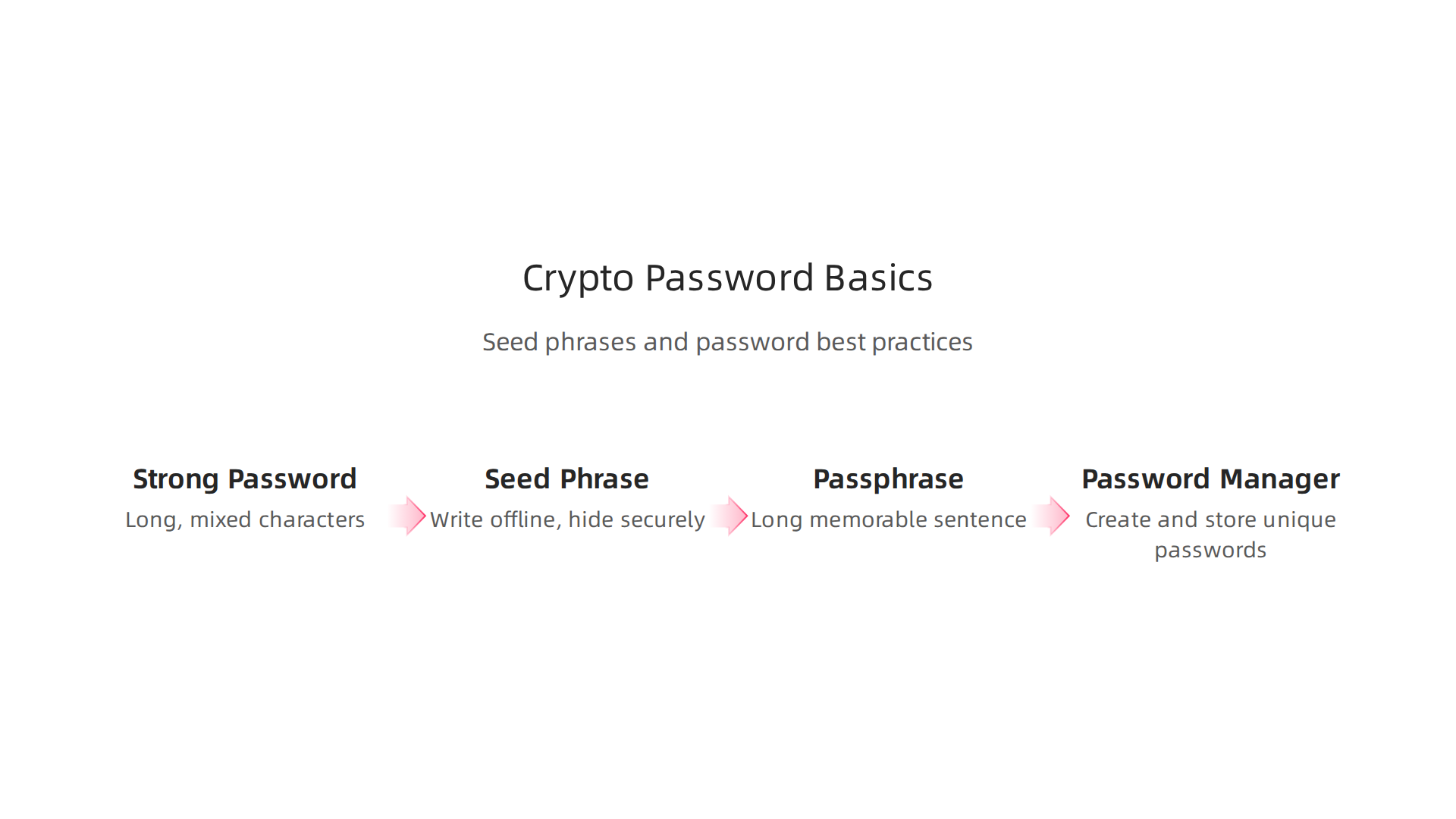
These are your main defenses against bad actors trying to steal your crypto. Thinking about cryptocurrency and security means focusing on how you protect these important pieces of information.
Your Crypto Password: Make It Super Strong
Just like a strong lock on a safe, your crypto password needs to be very hard to guess. Don’t use simple words or easy number patterns. In 2026, experts still recommend passwords that are long and mix different kinds of characters. This means using:
- Capital letters (A, B, C)
- Small letters (a, b, c)
- Numbers (1, 2, 3)
- Special symbols (!, @, #)
The more mixed up and long your password is, the harder it is for computers to guess. This is sometimes called "high-entropy," meaning it’s very random and tough to crack. Good password generators can create passwords that are 18 characters long, using all these types of characters to make them super strong, according to a recent security report [PDF Security White Paper – Passbolt Pro Edition v5.10 (rev10)].
Seed Phrases: Your Master Key
A seed phrase is a special list of 12 or 24 words that acts like a master key to your entire crypto wallet. If you lose it or someone else finds it, they can take all your money. That’s why keeping your seed phrase safe is perhaps the most important part of bitcoin security or any crypto security.
Here’s how to keep it safe:
- Write it down: Use pen and paper.
- Keep it offline: Never store your seed phrase on a computer, phone, or in the cloud. This keeps it away from online hackers.
- Hide it well: Put the paper in a very secure place, like a safe or a bank vault. Think about using a fireproof or waterproof container.
Passphrases: Easy to Remember, Hard to Guess
A passphrase is like a password but much longer, usually a sentence or a string of words that’s easy for you to remember but hard for others to guess. For example, "My dog loves to chase squirrels at the park on Tuesdays!" It’s much longer than a typical password, which adds a lot of strength. Passphrases help you create strong security without needing to memorize a random string of symbols [PDF Dashlane Security Principles Architecture 20260211]. They are similar to passwords in how they are used, but generally much longer [PDF NIST SP 800-63B-4 Second Public Draft, Digital Identity Guidelines].
Password Managers: Your Best Friend for Security
Many people find it hard to create and remember many unique, strong passwords. That’s where password managers come in handy. These tools can:
- Create strong passwords: They make those long, mixed-character passwords for you.
- Remember them all: You only need to remember one master password for the manager, and it stores all your others securely.
- Help with unique passwords: They make sure you use a different, strong crypto password for every account, which stops hackers from getting into all your accounts if one gets compromised [PDF Dashlane Security Principles Architecture 20260211].
Using a password manager is a top tip for better cryptocurrency and security in 2026.
Many studies show that people often don’t use password managers, even though they are a great help [PDF Replication: A Study on How Users (Don’t) Use Password Managers]. Popular operating systems also offer built-in password management features that help create strong passwords [PDF Apple Platform Security].
What Companies Should Do
Organizations that deal with crypto also have a role to play. They should:
- Teach users clearly: Give easy-to-understand advice about how to create strong passwords, store seed phrases, and use passphrases. It’s important for crypto companies to teach their users about safety [The importance of user education in crypto].
- Add safety steps: When a user creates a new wallet or account, the platform should remind them about seed phrase storage and suggest strong passwords.
- Encourage tools: Tell users about password managers and why they’re helpful.
By following these fundamentals, everyone can improve their personal bitcoin security and make the crypto world safer. For companies, strong user education helps protect your business assets and builds trust. Learn more about protecting your business assets in our guide to Web3 Crypto Security for Organizations in 2026.
Want more simple, step-by-step guides and tips to keep your crypto safe?
Sign Up for the free Clicks and Trades newsletter today.
Keeping your digital money safe means using smart tools and practices beyond just strong passwords. In 2026, there are some great tools that help make cryptocurrency and security much better for everyone. Let’s look at password managers, hardware wallets, and multi-signature setups.
Tools that Reduce Risk: Password Managers, Hardware Wallets, and Multi-Signature Setups
You already know password managers are great for creating and remembering strong, unique passwords for all your online accounts, including those linked to your crypto. They generate tough-to-guess crypto password combinations and keep them safe behind one master password you remember. This stops hackers from getting into all your accounts if just one password gets figured out.
However, there’s a big rule for password managers and crypto: never store your seed phrase or private keys inside a password manager. Seed phrases are like your master key and should always be written down and kept completely offline, away from any computer or online tool. Password managers are for the passwords you use to log into exchanges or apps, not for your deeply sensitive wallet recovery words.
Hardware Wallets: Your Offline Safe
For really strong bitcoin security and protecting other digital money, many people choose a hardware wallet.
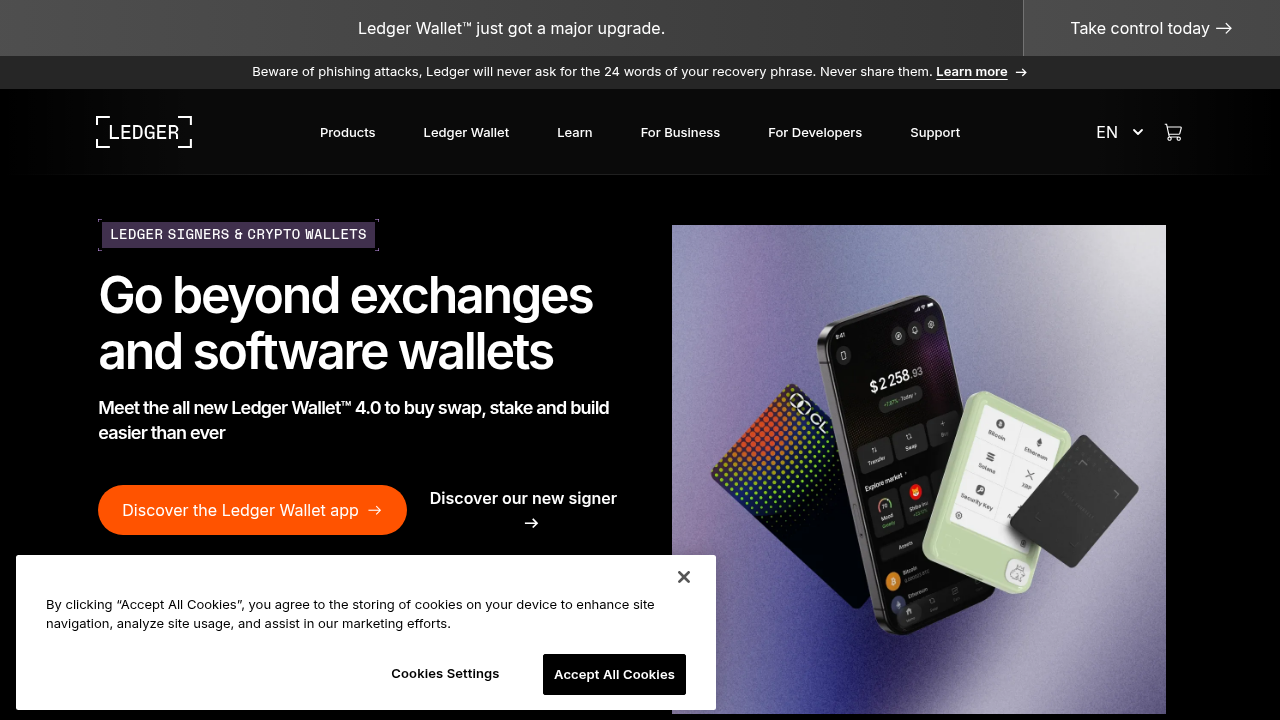
Think of it like a small, secure computer that holds your crypto keys.
Here’s why they’re so good:
- Offline Security: A hardware wallet keeps your private keys completely offline, meaning they’re safe from internet hackers and computer viruses. When you want to send crypto, you plug the wallet in, approve the transaction on the device itself, and then unplug it. Your keys never touch the internet directly. This is called "cold storage" and it’s a top way to protect your digital assets, according to security guides in 2026.
- Physical Protection: You need the physical device in your hand to move funds. This adds a layer of safety, making it much harder for someone to steal your crypto without actually stealing the wallet from you.
- Good for Big Holdings: These wallets are best for people or organizations holding a lot of crypto for a long time, as it’s the safest way to store larger amounts of money (https://www.cobo.com/post/crypto-wallet-security-complete-guide).
The main trade-off is that they cost money and are not as quick for small, frequent trades. Also, like any physical item, a hardware wallet can be lost or broken, so always keep its seed phrase extra safe. You should also keep your wallet software and hardware updated (https://www.kirolsite.com/2026/Emerging-Market-Equities-Outlook-Q1-2026-Riding-the-Wave-of-Innovation-and-Growt?Best-Practices-for-Multisig-Wallet-Setups-Ensuring-Security-and-Efficiency-%28Part).
Multi-Signature (Multi-Sig) Setups: More Keys, More Safety
Imagine a safe that needs two or more keys to open it. That’s how a multi-signature, or multi-sig, setup works for crypto.

Instead of just one private key being able to move funds, a multi-sig wallet requires several approvals to spend the money (https://stablecoininsider.org/best-secure-wallets-for-holding-stablecoins/).
Here’s why multi-sig is super secure:
- No Single Point of Failure: If one key gets lost or stolen, your money is still safe because the other keys are needed to approve any transaction. This greatly reduces risk (https://www.totalsig.com/blog/best-practices-for-keys).
- Teamwork for Funds: It’s perfect for groups, like companies or families, who share crypto funds. Everyone has a say, and no single person can move all the money on their own. Many top multi-sig wallets exist in 2026 to help with this (https://coingape.com/best-multisig-crypto-wallets/).
- Extra Personal Safety: Even for individuals, you can set up a multi-sig wallet where you hold, say, two out of three keys. This means if one device is compromised, you still have control. Some advanced users even build their own multi-sig setups (https://onrampbitcoin.com/knowledge-center/best-bitcoin-wallets-in-2026-how-to-choose-the-right-one-for-your-situation).
The catch is that multi-sig setups can be more complex to set up and manage. They also require coordination if multiple people are involved. But for critical cryptocurrency and security needs, especially for organizations, they offer a very strong defense (https://cryptoadventure.com/best-multisig-wallets-in-2026-top-multi-signature-wallets-for-bitcoin-ethereum-and-team-treasuries/).
How Platforms Can Help with These Tools
Crypto platforms and companies have a big job in helping users adopt these strong tools. They should:
- Talk About Integrations: Show users which hardware wallets and multi-sig options work well with their platform.
- Teach Users Clearly: Offer simple, easy-to-understand guides on how to use hardware wallets and set up multi-sig. This is where good security education helps everyone, from individuals to organizations (https://bcon.global/how_to_choose_the_best_wallet/).
- Give Support: Have clear steps for customer support teams to help users with these advanced security options.
By supporting these tools and teaching users how to use them, organizations can boost overall cryptocurrency and security and protect everyone’s digital assets. If you’re a business looking to improve your security education, learning more about different wallet choices matters for your organization.
Want more simple, step-by-step guides and tips to keep your crypto safe? The free Clicks and Trades newsletter can provide more clear guidance. You can learn more about protecting your business assets in our guide to Web3 Crypto Security for Organizations in 2026.
Sign Up for the free Clicks and Trades newsletter today.
Zero-knowledge proofs: what they are and why product teams should care
Now, let’s talk about something exciting that’s getting a lot of attention in 2026 for making cryptocurrency and security even better: zero-knowledge proofs, or ZKPs for short. Sounds fancy, right? But the idea is quite simple.
Imagine you want to prove to someone that you know a secret, but you don’t want to actually tell them the secret. That’s what a zero-knowledge proof does! It’s a way to show that a statement is true without revealing any extra information about it.
For example, you could prove you are over 18 without showing your birth date, or prove you have enough money for a purchase without showing your exact bank balance. This cool technology lets you verify information in a very private way, keeping your details safe and hidden (https://www.dock.io/post/zero-knowledge-proofs).
How ZKPs Change How We Use Crypto
These special proofs can really change how we deal with privacy and safety in the digital world. Here’s why product teams are paying close attention to zero-knowledge proof crypto solutions:
- Better Privacy for You: ZKPs let you prove things like who you are or that you own a certain digital item without sharing all your personal data with a platform. This means less of your sensitive info, like a crypto password or address, is floating around online. It’s a huge step for privacy (https://www.ainvest.com/news/knowledge-proofs-big-catalyst-crypto-2026-2601/).
- Safer Logins and Wallets: Think about logging into a crypto exchange. Right now, you usually type in a password. With ZKPs, you might be able to prove you own the account without the platform ever seeing your actual password. This can make key custody, which is how you manage your private keys for your digital money, much safer (https://thepermatech.com/zero-knowledge-proofs-trends-in-web3-security-2026/). It reduces how much private user information platforms need to store, which means less risk if a platform gets hacked. This is a game-changer for bitcoin security and other cryptocurrencies.
- Privacy on the Blockchain: Blockchains usually show all transactions for everyone to see. ZKPs can help hide parts of these transactions, like who sent what, while still proving that the transaction was real and valid. This is especially helpful for financial privacy in decentralized finance (DeFi) (https://rocknblock.io/blog/top-5-zero-knowledge-proof-use-cases-in-defi).
What’s Next for ZKPs?
While zero-knowledge proofs are super promising, they are still quite new and can be complex to set up. We’re seeing more and more ZKP tools and uses in 2026, especially for bigger projects and specific privacy needs (https://www.nadcab.com/blog/zero-knowledge-proof-in-blockchain).
It will take some more time for ZKPs to become a common part of our everyday logins and regular wallet apps. They are being worked on for many different uses, from making blockchains faster to creating more private digital IDs (https://ethereum.org/zero-knowledge-proofs/). For businesses, understanding these upcoming technologies is key to staying ahead in digital asset protection. If your organization wants to improve its overall approach to digital asset protection, understanding future tools like these is part of building a stronger security posture. Learn more about why crypto safety matters for organizations in 2026.
Want to keep learning about new ways to protect your crypto and stay safe from scams? The free Clicks and Trades newsletter gives clear guidance and helpful tips. You can get more step-by-step advice on navigating the world of crypto.
Sign Up for the free Clicks and Trades newsletter today.
We just learned that zero-knowledge proofs, or ZKPs, are a powerful way to prove something is true without sharing the actual secret. That’s a big deal for keeping your information safe online, especially with your digital money. Let’s look at how ZKPs can actually help you avoid showing your crypto password and boost privacy in the real world in 2026.
Logging In Without Sharing Your Password
Imagine logging into your favorite crypto exchange or online service without ever typing your actual crypto password. Sounds like magic, right? With ZKPs, this can become a reality.
- Proof of Identity: Instead of sending your password to a website, you could use a ZKP. This proof would simply confirm that you know the password, but the website would never see the password itself [^1]. This keeps your login details much safer from hackers or data breaches. It means the platform stores less private information about you, which is a major win for
cryptocurrency and security. - Safer Crypto Accounts: For digital wallets and exchanges, this is huge. It means better
bitcoin securityand protection for all your digital assets. You could prove you own your wallet without revealing your private key or seed phrase to anyone, not even the service provider [^2]. This makes key custody much more secure.
Proving Things Privately
ZKPs aren’t just for logins. They can also help you prove other facts about yourself or your crypto holdings without giving away too much information.
- Private ID Checks: Think about showing you are old enough to do something without revealing your birth date. Or proving you meet a financial requirement without showing your exact bank balance. ZKPs let you do this [^3]. This is called a "privacy-preserving attestation."
- Meeting Rules Secretly: For businesses, ZKPs can help meet important rules like anti-money laundering (AML) and know-your-customer (KYC) checks without collecting and storing all of a user’s sensitive personal data. This keeps everyone safer while still following the rules [^4].
What Teams Think About When Using ZKPs
While ZKPs offer huge benefits, building them into everyday tools takes some thought. Product and engineering teams face a few challenges:
- Making it Easy to Use: ZKPs can be complex under the hood. The trick is to make them simple for you, the user. The goal is a smooth experience, so you hardly notice the powerful security working in the background.
- How Fast It Works: Generating a zero knowledge proof crypto often takes computer power and time. Teams need to make sure these proofs can be created and checked quickly so they don’t slow down apps or transactions. This is an ongoing area of improvement [^5].
- Working with Other Systems: New ZKP tools need to play nicely with existing crypto wallets, blockchains, and online platforms. Ensuring "interoperability" means making sure they can all talk to each other without problems [^6].
A Checklist for Piloting ZKP Features
If your team is thinking about using ZKPs, here’s a simple checklist to get started safely:
- Start Small: Don’t try to change everything at once. Pick one specific problem, like a new login method, to test ZKPs [^7].
- Focus on the User: Always think about how the new feature will feel to people using it. Is it clear? Is it easy?
- Test, Test, Test: Run many tests to make sure the ZKP system is secure and works as expected, without glitches.
- Look at Performance: Measure how fast and smoothly the ZKPs work. Are they quick enough for your users?
- Get Expert Help: ZKPs are a specialized field. Getting advice from experts can help avoid mistakes [^8].
Building a strong approach to cryptocurrency and security means looking at new tools like these. Learning about these new security steps is key to strong Web3 crypto security for organizations in 2026.
Want to stay ahead with helpful, easy-to-understand advice on protecting your crypto and spotting scams? The free Clicks and Trades newsletter can give you more step-by-step guidance [^9].
Sign Up for the free Clicks and Trades newsletter today.
We just learned how zero-knowledge proofs can help you log in without sharing your secret crypto password. That’s great for general online safety. Now, let’s talk about Bitcoin. Bitcoin has its own special ways of keeping your digital money safe, and these methods are a bit different from a simple crypto password.
Bitcoin-specific security: private key custody, recovery models and platform responsibilities
When you own Bitcoin, you don’t actually hold digital coins in your hand. Instead, you hold "keys" that let you spend your Bitcoin. Think of these keys as proof that you own specific bits of digital value on the Bitcoin network, often called UTXOs (Unspent Transaction Outputs). Your "private key" is the real secret here, not just a crypto password. Losing it or having it stolen means losing your Bitcoin forever. This is why managing these keys is super important for bitcoin security in 2026.
How We Keep Bitcoin Keys Safe
There are different ways people store their Bitcoin keys, and each has its own good and bad points:
- You Hold Your Own Keys (Self-Custody): This means you are fully in charge. Many people use special devices called hardware wallets to keep their private keys offline and safe from hackers [^7]. You also get a "seed phrase," which is a list of words that can recreate your private key if you lose your hardware wallet. Keeping this seed phrase safe and secret is key for
cryptocurrency and security[^6]. If you lose both your hardware wallet and your seed phrase, your Bitcoin is gone. - Someone Else Holds Your Keys (Custodial Services): This is when you keep your Bitcoin on a platform like a crypto exchange. They hold the private keys for you, much like a bank holds your cash. This can feel easier, but it means you trust the platform to keep your funds safe from hacks or other problems [^1]. You usually log in with a
crypto passwordand other security steps, but the main key is with them. - Keys Held by Many (Multi-Signature Wallets): Imagine a safe that needs two or three keys to open it, and different people hold those keys. That’s how a multi-signature (or "multi-sig") wallet works for Bitcoin [^2]. To move your Bitcoin, you need more than one person (or device) to approve the transaction [^4]. This makes it much harder for a single hacker to steal your money, even if they get one key. Tools like Electrum and Sparrow Wallet let advanced users set up their own multi-sig systems [^3]. This is a powerful way to boost
bitcoin security, especially for groups or businesses.
Getting Your Bitcoin Back: Recovery Models
What happens if you forget your crypto password for an exchange, or lose your hardware wallet?
- Self-Custody Recovery: If you use a hardware wallet, your seed phrase is your lifeline. If you lose your device, you can use your seed phrase to get your Bitcoin back on a new wallet [^6]. This shows why protecting that seed phrase is so important.
- Custodial Recovery: If an exchange holds your Bitcoin, they usually have ways for you to get access back, like resetting your
crypto passwordwith email verification or a support process. But this depends on their rules and security. - Multi-Sig Recovery: With multi-sig, if one key is lost or a person isn’t available, the other keys can still help you get access to your funds [^5]. This reduces the risk of one single point of failure.
What Platforms Must Consider
For platforms offering Bitcoin services, thinking about how users manage keys and recover funds is a big deal. They need to:
- Help Users Be Safe: Provide clear ways for users to set up strong
crypto passwordprotection and use two-factor authentication. They also need to educate users on how to protect their own seed phrases and private keys if they choose self-custody [^1]. - Manage Risks: If a platform holds user funds, they take on a lot of risk. They must have top-notch
cryptocurrency and securitysystems to prevent hacks, as cyber threats are a constant concern in 2026 [^8]. - Follow Rules: Platforms need to meet legal requirements about protecting customer money and making sure they know who their customers are, even as they aim for better privacy.
Understanding these different ways to manage your Bitcoin keys and plan for recovery is a key part of smart cryptocurrency and security. Learning about these new security steps is key to strong Web3 crypto security for organizations in 2026.
Want to stay ahead with helpful, easy-to-understand advice on protecting your crypto and spotting scams? The free Clicks and Trades newsletter can give you more step-by-step guidance.
Sign Up for the free Clicks and Trades newsletter today.
When we talk about keeping your digital money safe, knowing the technical parts is just one piece of the puzzle. The other big piece is making sure everyone understands how to be safe. For companies that deal with crypto, like exchanges or wallet providers, teaching users about cryptocurrency and security is super important. It’s not enough to just have strong security on their end; they also need to help you avoid common mistakes. This means building a clear and helpful education plan.
Scaling Education: Building a Security-First User Education and Support Program
Imagine an organization that wants all its users to be crypto-smart. To do this, they need a good plan for teaching and helping people. This plan covers what to teach, how to teach it, and how to know if it’s working.
A Strong Plan for Learning
A good education program starts with figuring out the most important things to teach. For example, users need to know:
- How to create a super strong
crypto password: This isn’t just for logging in; it’s often the first line of defense. Companies should teach users to pick long, complex passwords or passphrases that are hard for anyone to guess [^11]. Using a password manager can help a lot with this, as these tools can create and remember strong passwords for you [^9]. - Why protecting your seed phrase is like protecting a treasure map: If you use your own wallet, this is the most critical piece of information, not just another
crypto password. Losing it means losing your crypto forever. - What two-factor authentication (2FA) is and why you need it: It’s like having a second lock on your digital door.
- How to spot tricky scams: Phishing emails and fake websites are big problems in 2026. Education helps users recognize these dangers.
How do companies share this knowledge? They can use:
- Simple blog posts and easy-to-read guides.
- Short, helpful videos.
- Webinars where experts answer questions.
- Small tips and warnings that pop up inside the app when you’re doing something important. These are called "in-product nudges" and help users make safer choices right away.
To know if their teaching is working, companies look at things like:
- Are fewer people losing access because of weak
crypto passwordissues? - Are more users turning on 2FA?
- Are fewer users falling for common scams?
Helping Users When Things Go Wrong
Even with great education, sometimes users need help. Companies need clear steps for their support teams:
- Support Playbooks: These are like recipe books for customer support. If someone forgets their
crypto passwordfor an exchange, the playbook tells the support team exactly what steps to follow to help them reset it safely. If a user needs help understandingbitcoin securityfor their self-custody wallet, the playbook guides the support team on how to explain seed phrases and recovery options. - Escalation Paths: Some problems are big and need extra help, like if a user thinks their account was hacked. The plan should say when a problem needs to go to a special security team.
In-product nudges are also helpful here. Imagine a small message popping up when you’re about to send crypto, asking, "Are you sure this is the right address?" This small reminder can prevent big mistakes.
Working Together for Better Security
For companies, this education isn’t just about teaching; it’s about fitting into the bigger picture:
- Compliance: Governments and rules in 2026 want companies to protect users. Good education shows a company is serious about
cryptocurrency and securityand following these rules. It also helps with advanced topics, like explaining howzero knowledge proof cryptocan meet privacy and identity checks without revealing too much personal info [^5, ^29]. - Customer Success: When users feel safe and understand how to use crypto, they’re happier and more likely to stick with the platform. Education directly helps customers use the product well and avoid costly problems.
- Product Roadmaps: As new features are added, like new types of wallets or ways to interact with crypto, the education plan must grow with them. This means building security lessons into new products from the start.
By having a strong education and support program, companies can help users protect their digital money, reduce problems, and build more trust in the crypto space. It is a critical part of overall Web3 crypto security for organizations in 2026.
Want to stay ahead with helpful, easy-to-understand advice on protecting your crypto and spotting scams? The free Clicks and Trades newsletter can give you more step-by-step guidance.
Sign Up for the free Clicks and Trades newsletter today.
Summary
This article explains practical, tested ways to protect crypto assets in 2026 for both individuals and organizations. It covers the most common causes of loss—weak or reused passwords, exposed seed phrases, and social engineering—and shows how strong, high‑entropy passwords, passphrases, and proper seed storage reduce risk. You’ll learn which tools to use (password managers, hardware wallets, and multi‑signature setups), what platforms should do to support safer choices, and why zero‑knowledge proofs are an emerging way to prove identity or ownership without revealing secrets. The piece also outlines custody and recovery models specific to Bitcoin, and gives product and support teams a roadmap for building user education, support playbooks, and metrics to lower incidents and rebuild trust. After reading, teams will be able to implement concrete steps to prevent common losses, pilot privacy‑preserving features, and scale clear security education across their user base.